Many people become concerned when they notice transplanted hair shedding several weeks or months after a hair transplant procedure. After investing time, money, and effort into hair restoration, seeing hairs fall out can feel alarming.
Fortunately, shedding around the three-month mark is often a normal part of the hair transplant recovery process. In many cases, the transplanted hairs shed while the hair follicles remain healthy beneath the scalp. New growth usually begins later as the follicles enter a new growth phase.
Understanding why shedding occurs, what recovery timelines look like, and when to seek medical advice can help reduce anxiety and set realistic expectations.
This guide explains why transplanted hair may shed after three months, what is considered normal, and what signs may indicate healthy recovery.
Quick Answer
Yes, transplanted hair shedding after three months is often normal. Most patients experience a temporary shedding phase known as shock loss or post-transplant shedding. The visible hairs may fall out, but the transplanted follicles generally remain intact beneath the scalp and later begin producing new hair growth.
For many patients, noticeable regrowth begins between months 3 and 6, with fuller results developing between 9 and 18 months after the procedure.
Key Facts
- Hair shedding after a transplant is common.
- Shedding does not usually mean the transplant failed.
- The follicles often remain healthy after the hairs fall out.
- New growth commonly starts between months 3 and 6.
- Final results often require 12–18 months.
- Individual recovery timelines vary.
Understanding Hair Transplant Recovery
Hair transplant surgery involves moving healthy hair follicles from a donor area to areas affected by hair loss.
Common procedures include:
- Follicular Unit Extraction (FUE)
- Follicular Unit Transplantation (FUT)
Once transplanted, the follicles undergo a healing process before producing new permanent hair growth.
This recovery period occurs in stages and often includes temporary shedding.
What Is Shock Loss?
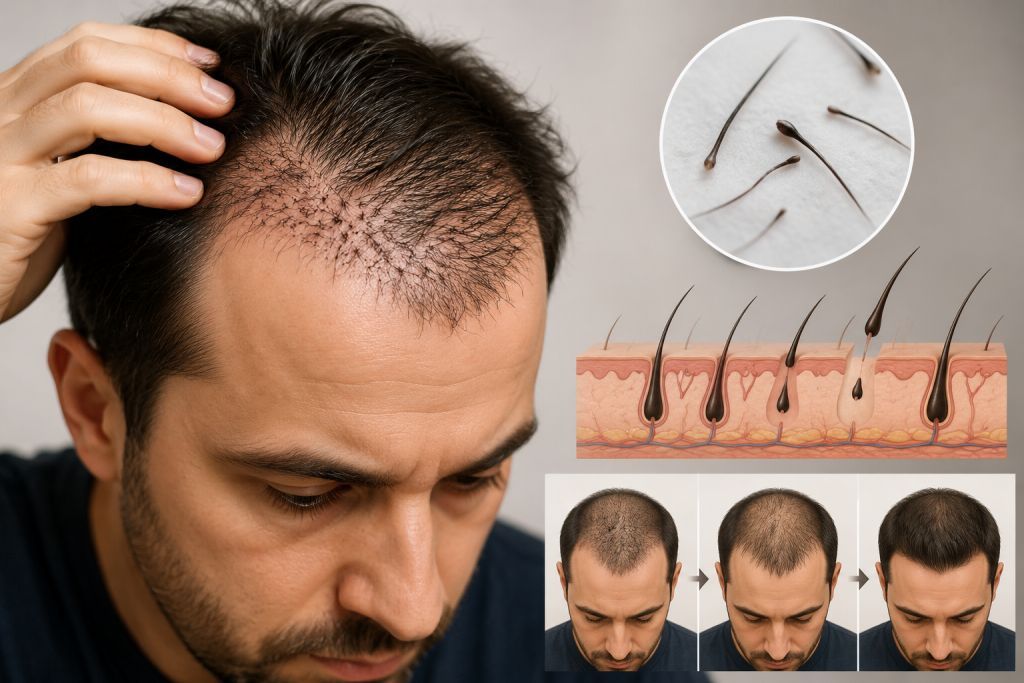
Shock loss is one of the most common reasons transplanted hair sheds after surgery.
Shock loss refers to temporary hair shedding that occurs when hair follicles experience stress from the transplant procedure.
The surgery itself temporarily disrupts the normal hair growth cycle, causing many transplanted hairs to enter a resting phase before shedding.
This process may look concerning but is usually expected.
Why Does Hair Shedding Occur Around 3 Months?
Hair follicles grow in repeating cycles consisting of:
- Anagen (growth phase)
- Catagen (transition phase)
- Telogen (resting phase)
- Exogen (shedding phase)
Following transplantation, many follicles temporarily enter the shedding stage.
The visible hair shafts often fall out while the follicles remain alive beneath the skin.
Three months is a common timeframe when patients notice ongoing shedding or temporary thinning before new growth begins.
Does Shedding Mean the Hair Transplant Failed?
In most cases, no.
Shedding is often part of the normal healing process and does not indicate transplant failure.
What many patients see falling out is the transplanted hair shaft rather than the follicle itself.
The follicle usually remains embedded in the scalp and may begin producing new hair several weeks or months later.
What Happens to the Follicles After Shedding?
After shedding occurs, the follicles typically enter a resting period.
During this phase:
- The scalp continues healing.
- Blood supply to the follicles improves.
- The follicles adapt to their new location.
- Future hair growth develops beneath the skin.
Eventually, the follicles re-enter the growth phase and begin producing new hair.
Hair Transplant Recovery Timeline
| Time After Surgery | Typical Changes |
|---|---|
| Week 1 | Healing, redness, scabbing |
| Weeks 2–4 | Early shedding begins |
| Months 1–3 | Shock loss commonly occurs |
| Months 3–6 | Early regrowth begins |
| Months 6–9 | Increasing density and thickness |
| Months 9–12 | Significant visible improvement |
| Months 12–18 | Final maturation and results |
How Much Shedding Is Normal?
The amount of shedding varies considerably.
Some individuals experience:
- Minimal shedding
- Moderate thinning
- Extensive temporary shedding
The degree of shedding does not necessarily predict final transplant success.
Patients with significant shedding may still achieve excellent long-term outcomes.
Can Native Hair Also Shed?
Yes.
In some cases, existing non-transplanted hairs near the treatment area may also experience temporary shock loss.
This can create the appearance of worsening hair loss during the early recovery period.
For many individuals, affected native hairs eventually regrow.
Normal vs Abnormal Shedding After a Hair Transplant
| Normal Recovery Signs | Potential Warning Signs |
|---|---|
| Gradual shedding | Severe pain |
| Temporary thinning | Persistent infection |
| Mild scalp sensitivity | Significant swelling |
| Delayed regrowth | Continuous worsening months later |
| Visible improvement over time | Unusual scalp discharge |
Why Some Patients Think Their Results Are Getting Worse
The three-month period is often called the "ugly duckling phase" of hair transplant recovery.
During this stage:
- Many transplanted hairs have shed.
- New growth may not yet be visible.
- The scalp may appear thinner than expected.
- Patients may become anxious about results.
This stage is frequently temporary and may be followed by gradual regrowth.
Factors That Affect Hair Regrowth
Several factors can influence recovery speed and final results.
- Age
- Overall health
- Hair characteristics
- Genetics
- Smoking status
- Post-operative care
- Surgeon experience
- Transplant technique
Recovery timelines differ from person to person.
Hair Transplant Statistics and Recovery Research
Hair transplantation has become one of the most commonly performed cosmetic procedures for hair restoration worldwide.
- Modern FUE and FUT procedures generally have high graft survival rates when performed by experienced surgeons.
- Most patients experience some degree of post-transplant shedding.
- Visible regrowth often begins between months 3 and 6.
- Hair density usually improves significantly between months 6 and 12.
- Final results may continue developing for up to 18 months.
Understanding these timelines can help patients maintain realistic expectations during recovery.
Signs Your Hair Transplant Is Healing Properly
Although shedding can be alarming, several signs may indicate that recovery is progressing normally.
- Scabs resolve within the first few weeks.
- Redness gradually fades.
- No signs of infection develop.
- Shedding occurs without severe pain.
- The scalp continues to heal normally.
- New growth eventually begins to appear.
Temporary thinning does not necessarily indicate a problem with the transplant.
When Does New Hair Start Growing?
Most patients begin seeing early signs of new growth between months 3 and 6.
However, the timing varies.
| Recovery Stage | Expected Hair Growth |
|---|---|
| Months 1–3 | Little to no visible growth |
| Months 3–6 | Early thin hairs may appear |
| Months 6–9 | Noticeable improvement in density |
| Months 9–12 | Significant thickening |
| Months 12–18 | Final maturation and texture improvements |
Patience is often necessary because hair growth occurs gradually.
Why Some Hair Grows Unevenly
It is common for transplanted hairs to grow at different rates.
This happens because:
- Follicles enter growth phases at different times.
- Healing varies across the scalp.
- Individual follicles respond differently to transplantation.
- Hair thickness and texture may vary during recovery.
Uneven growth during the first year is usually not unusual.
Can Stress Affect Hair Transplant Recovery?
Stress may influence overall hair health and recovery.
Potential effects include:
- Increased shedding
- Poor sleep quality
- Delayed healing
- Higher anxiety regarding results
Managing stress can support overall recovery and well-being.
Can Smoking Affect Hair Regrowth?
Smoking may negatively affect blood circulation and healing.
Potential concerns include:
- Reduced oxygen delivery
- Impaired wound healing
- Potential effects on graft survival
- Slower recovery
Many surgeons recommend avoiding smoking during the recovery period.
Recovery Tips After Hair Transplant Surgery
Following post-operative instructions carefully can support optimal results.
- Follow your surgeon's aftercare plan.
- Avoid scratching the scalp.
- Protect the scalp from excessive sun exposure.
- Maintain a healthy diet.
- Stay hydrated.
- Avoid smoking if possible.
- Attend follow-up appointments.
- Be patient with the recovery process.
Consistent aftercare can help create the best possible environment for hair growth.
When Should You Contact Your Surgeon?
Although shedding is usually normal, certain symptoms may require medical attention.
Contact your surgeon if you experience:
- Persistent infection
- Severe scalp pain
- Unusual swelling
- Excessive bleeding
- Pus or discharge
- Sudden worsening of symptoms
- Concerns about graft survival
Your surgeon can evaluate whether additional treatment or monitoring is necessary.
Common Myths About Hair Transplant Shedding
Myth #1: Shedding Means the Transplant Failed
In most cases, shedding is a normal part of recovery and does not indicate failure.
Myth #2: New Hair Should Be Visible Immediately
Hair follicles require time to enter a new growth cycle after transplantation.
Myth #3: More Shedding Means Worse Results
The amount of shedding does not necessarily predict long-term outcomes.
Myth #4: Growth Stops After One Year
Some patients continue seeing improvements for up to 18 months after surgery.
Pros and Cons of the Hair Transplant Recovery Process
| Pros | Cons |
|---|---|
| Permanent hair restoration potential | Temporary shedding can be stressful |
| Natural-looking results | Results require patience |
| Improved appearance for many patients | Recovery timelines vary |
| Long-term benefits | Initial thinning may occur |
| High satisfaction rates | Final results may take 12–18 months |
Frequently Asked Questions
Why is my transplanted hair shedding after 3 months?
Shedding around three months is commonly caused by shock loss, a normal part of the recovery process after hair transplantation.
Will transplanted hair grow back after shedding?
In most cases, yes. The hair shafts may shed while the follicles remain healthy and later produce new growth.
How long does shock loss last?
The duration varies, but many patients begin seeing new growth between months 3 and 6.
Is it normal to look thinner at 3 months than before surgery?
Yes. Temporary thinning during the shedding phase is common and often improves later.
When will I see noticeable hair transplant results?
Many patients notice visible improvements between 6 and 12 months after surgery.
Can stress increase hair shedding after a transplant?
Stress may affect hair health and overall recovery, although some shedding is expected regardless.
How do I know if my transplant is failing?
Persistent complications, infection, or lack of improvement over time should be discussed with your surgeon.
Summary
Transplanted hair shedding after three months is usually a normal part of the recovery process. This shedding, commonly known as shock loss, often occurs because transplanted follicles temporarily enter a resting phase before beginning new growth. Although the visible hairs may fall out, the follicles typically remain healthy beneath the scalp. Most patients begin seeing new growth between months 3 and 6, with substantial improvements occurring between months 6 and 12. Final results often continue developing for up to 18 months after surgery.
Conclusion
Seeing transplanted hair shed three months after a procedure can be stressful, but it is often a sign that the follicles are progressing through a normal recovery cycle. Hair transplantation is a long-term process that requires patience, realistic expectations, and proper aftercare.
Understanding the stages of recovery can help reduce anxiety and improve confidence during the healing journey. If concerns arise, maintaining communication with your surgeon is the best way to ensure recovery remains on track and that any potential issues are addressed promptly.
Sources
- American Academy of Dermatology (AAD)
- International Society of Hair Restoration Surgery (ISHRS)
- MedlinePlus
- National Center for Biotechnology Information (NCBI)
- National Institutes of Health (NIH)
- Cleveland Clinic
- Mayo Clinic
- Harvard Health Publishing
- National Institute of Arthritis and Musculoskeletal and Skin Diseases (NIAMS)
- U.S. Food and Drug Administration (FDA)