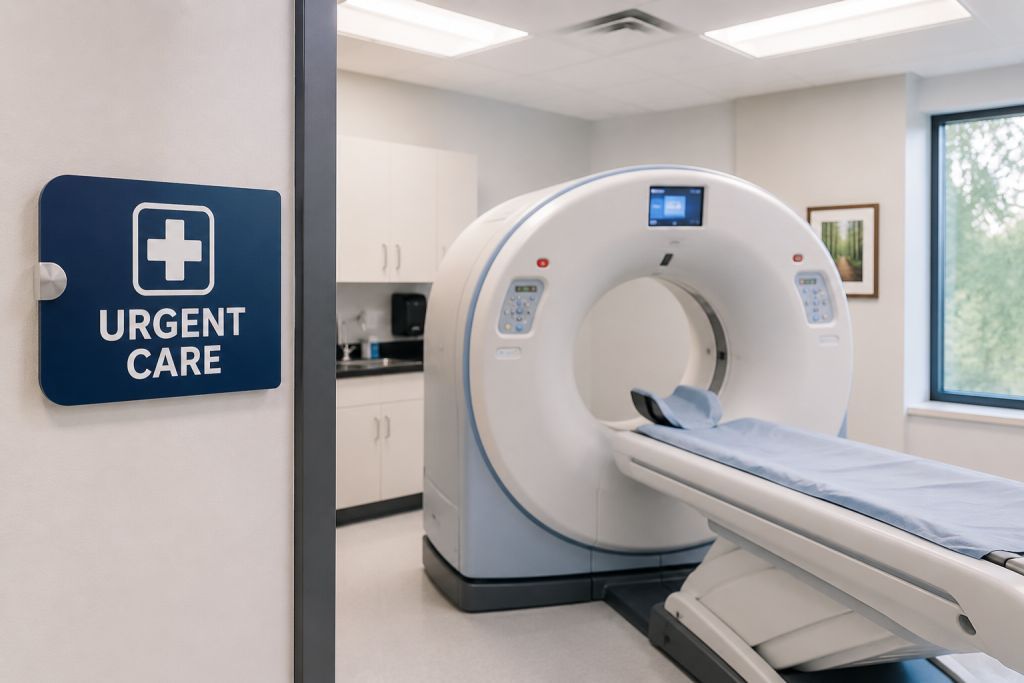
If you've experienced a head injury, severe abdominal pain, persistent headaches, or another condition requiring advanced imaging, you may wonder: Does urgent care do CT scans?
The answer depends on the specific urgent care center. Most urgent care facilities do not have CT scanners on-site, but some larger or specialized urgent care centers may offer CT imaging services. In many cases, urgent care providers evaluate patients and then refer them to an imaging center, hospital, or emergency department when a CT scan is needed.
Because CT scanners are expensive and require specialized equipment and personnel, they are less common in urgent care settings than services such as X-rays, laboratory testing, and basic diagnostic procedures.
This guide explains when CT scans may be needed, whether urgent care centers perform them, what alternatives are available, and when emergency medical care may be necessary.
Quick Answer
Most urgent care centers do not perform CT scans on-site.
However, urgent care providers can often:
- Evaluate symptoms
- Perform physical examinations
- Order X-rays
- Recommend CT scans
- Refer patients to imaging centers
- Direct patients to hospitals when necessary
Some larger urgent care facilities may offer CT scanning services, but availability varies by location.
What Is a CT Scan?
A CT scan, or computed tomography scan, is an advanced imaging test that uses X-rays and computer technology to create detailed cross-sectional images of the body's internal structures.
CT scans help healthcare providers evaluate:
- Bones
- Organs
- Blood vessels
- Soft tissues
- Internal injuries
These detailed images often provide more information than standard X-rays.
Why CT Scans Are Used
Healthcare providers may recommend CT scans for a variety of medical reasons.
Common uses include:
- Head injuries
- Abdominal pain
- Chest pain evaluation
- Kidney stones
- Suspected internal bleeding
- Certain infections
- Fracture assessment
- Tumor evaluation
The decision to order a CT scan depends on symptoms, medical history, and clinical findings.
Why Most Urgent Care Centers Do Not Have CT Scanners
CT scanners require significant resources and infrastructure.
Challenges include:
- High equipment costs
- Specialized facilities
- Radiology staff requirements
- Maintenance expenses
- Advanced imaging interpretation
For these reasons, many urgent care centers focus on providing basic diagnostic services rather than advanced imaging.
What Imaging Services Are Common at Urgent Care?
Although CT scans are uncommon, many urgent care facilities provide several diagnostic imaging options.
Common services include:
- Digital X-rays
- Basic radiology services
- Certain ultrasound referrals
- Diagnostic evaluations
X-rays are among the most frequently available imaging services in urgent care settings.
Can Urgent Care Order a CT Scan?
Yes. Even if a facility does not perform CT scans on-site, many urgent care providers can recommend or arrange additional imaging.
Depending on the situation, the provider may:
- Refer you to an imaging center
- Coordinate with a hospital
- Recommend emergency evaluation
- Order follow-up diagnostic testing
The referral process helps ensure patients receive appropriate imaging when necessary.
Can Urgent Care Refer You for a CT Scan?
Yes. Referral is one of the most common ways urgent care providers handle cases requiring advanced imaging.
After evaluating the patient, the provider may determine that:
- A CT scan is needed
- Additional specialist evaluation is necessary
- Hospital-based care is appropriate
Referrals help patients access advanced diagnostic services without unnecessary delays.
When Might a CT Scan Be Needed?
Healthcare providers may consider CT imaging when symptoms suggest conditions that cannot be adequately evaluated with a physical examination or standard X-ray.
Potential situations include:
- Severe headaches
- Head trauma
- Suspected internal injuries
- Persistent abdominal pain
- Neurological symptoms
- Certain chest conditions
The need for imaging depends on individual circumstances and clinical judgment.
Can Urgent Care Do CT Scans for Head Injuries?
Most urgent care centers evaluate head injuries initially.
If symptoms indicate a possible concussion, skull fracture, bleeding, or other serious concern, the provider may recommend a CT scan.
Because CT scanners are often unavailable on-site, patients may be referred to:
- Emergency departments
- Hospitals
- Imaging centers
Serious head injuries often require immediate medical attention.
Can Urgent Care Do CT Scans for Abdominal Pain?
Abdominal pain is another common reason CT imaging may be considered.
Potential concerns include:
- Appendicitis
- Kidney stones
- Internal infections
- Inflammatory conditions
If advanced imaging is needed, urgent care providers may refer patients for further evaluation.
Can Urgent Care Do CT Scans for Kidney Stones?
Kidney stones are often diagnosed using imaging studies.
Although some urgent care centers can perform initial evaluations and urine testing, CT scans are usually performed at imaging facilities or hospitals.
Patients with severe symptoms may require additional medical assessment.
Can Urgent Care Do CT Scans for Severe Headaches?
In certain situations, severe headaches may require advanced imaging.
Warning signs that may prompt CT imaging include:
- Sudden severe headache
- Neurological symptoms
- Head injury history
- Vision changes
- Confusion
Urgent care providers evaluate symptoms and determine whether referral is necessary.
How Urgent Care Evaluates Patients Before Ordering Imaging
Before recommending a CT scan, providers usually perform a comprehensive evaluation.
This may include:
- Medical history review
- Physical examination
- Vital sign assessment
- Neurological evaluation
- Diagnostic testing
These steps help determine whether advanced imaging is needed.
CT Scan vs. X-Ray: What's the Difference?
Many patients wonder why a provider might recommend a CT scan instead of a standard X-ray.
While both use radiation to create images, CT scans provide significantly more detail.
| Feature | CT Scan | X-Ray |
|---|---|---|
| Image Detail | Very Detailed | Basic Images |
| Soft Tissue Visibility | Excellent | Limited |
| Bone Evaluation | Excellent | Good |
| Equipment Cost | High | Lower |
| Availability at Urgent Care | Less Common | Very Common |
Because X-rays are faster and less expensive, they are often the first imaging test performed in urgent care settings.
How Much Does a CT Scan Cost?
The cost of a CT scan varies depending on:
- Body area being scanned
- Geographic location
- Facility type
- Insurance coverage
- Use of contrast materials
Hospital-based CT scans are often more expensive than imaging center services. Patients should contact the provider or imaging facility for specific pricing information.
Does Insurance Cover CT Scans?
Many health insurance plans cover medically necessary CT scans.
Coverage may depend on:
- Medical necessity
- Deductibles
- Copays
- Coinsurance
- Network participation
- Prior authorization requirements
Patients should review their insurance benefits to understand potential out-of-pocket costs.
What Is Prior Authorization?
Some insurance plans require prior authorization before covering certain imaging tests.
This process allows the insurer to review whether the CT scan meets coverage requirements.
Depending on the situation, providers may help coordinate this process when necessary.
How Long Does a CT Scan Take?
The scanning process itself is usually relatively quick.
Many CT scans take only a few minutes to complete.
However, total appointment time may be longer due to:
- Registration
- Preparation
- Contrast administration
- Image review
The exact duration varies based on the type of scan being performed.
What Happens During a CT Scan?
During the procedure, the patient typically lies on a motorized table.
The table moves through a large circular scanner that captures detailed images.
Patients may be asked to:
- Remain still
- Hold their breath briefly
- Follow instructions from the technologist
The process is generally painless.
Are CT Scans Safe?
CT scans are widely used diagnostic tools and are generally considered safe when medically appropriate.
Healthcare providers carefully weigh the benefits and risks before recommending imaging.
The information gained from a CT scan can be critical for diagnosing serious medical conditions.
Do CT Scans Use Radiation?
Yes. CT scans use X-ray technology, which involves exposure to ionizing radiation.
Healthcare professionals follow established guidelines to minimize radiation exposure while obtaining necessary diagnostic information.
Patients should discuss any concerns with their healthcare provider.
Can Urgent Care Send CT Scan Results to Your Doctor?
If an urgent care provider orders imaging through an affiliated facility, results are often shared with the referring provider and may also be forwarded to the patient's primary care physician.
This helps ensure continuity of care and appropriate follow-up treatment.
Urgent Care vs. Emergency Room for CT Scans
The appropriate setting depends on the severity of symptoms.
| Condition | Urgent Care | Emergency Room |
|---|---|---|
| Minor Injury | Often Appropriate | Usually Not Needed |
| Simple Fracture Evaluation | Often Appropriate | Sometimes Needed |
| Severe Head Injury | May Refer | Usually Appropriate |
| Stroke Symptoms | Not Appropriate | Emergency Care Needed |
| Severe Abdominal Pain | May Refer | Often Appropriate |
| Suspected Internal Bleeding | Not Appropriate | Emergency Care Needed |
Emergency departments are equipped to provide immediate advanced imaging and specialist consultation when necessary.
When Should You Go Directly to the Emergency Room?
Some symptoms require immediate emergency evaluation rather than urgent care.
Seek emergency medical attention for:
- Stroke symptoms
- Loss of consciousness
- Severe head trauma
- Chest pain
- Severe breathing difficulties
- Major injuries
- Signs of internal bleeding
These conditions may require immediate CT imaging and emergency treatment.
Benefits of Visiting Urgent Care First
For many non-emergency conditions, urgent care can be an appropriate starting point.
Benefits often include:
- Walk-in availability
- Shorter wait times
- Lower costs than emergency rooms
- Initial medical evaluation
- Access to X-rays and testing
- Referral coordination when needed
Urgent care providers can help determine whether advanced imaging is necessary.
Can Urgent Care Help You Avoid Unnecessary CT Scans?
Yes. Not every symptom requires advanced imaging.
Providers use clinical guidelines, examinations, and diagnostic testing to determine whether a CT scan is likely to provide useful information.
This approach helps patients avoid unnecessary procedures while ensuring appropriate care.
Common Myths About CT Scans and Urgent Care
Myth 1: Every Urgent Care Has a CT Scanner
False. Most urgent care centers do not have CT scanners on-site.
Myth 2: Urgent Care Cannot Order CT Scans
False. Many urgent care providers can refer patients for CT imaging when medically necessary.
Myth 3: CT Scans and X-Rays Are the Same
False. CT scans provide much more detailed images than standard X-rays.
Myth 4: Every Headache Requires a CT Scan
False. Providers evaluate symptoms and medical history before determining whether imaging is necessary.
Frequently Asked Questions
Does urgent care do CT scans?
Most urgent care centers do not perform CT scans on-site, although some larger facilities may offer this service.
Can urgent care order a CT scan?
Yes. Many urgent care providers can recommend or refer patients for CT imaging when appropriate.
Can urgent care refer me to an imaging center?
Yes. Referral to an imaging center is a common approach when advanced imaging is needed.
Does insurance cover CT scans?
Many insurance plans cover medically necessary CT scans, but deductibles, copays, and authorization requirements may apply.
Can urgent care diagnose a concussion without a CT scan?
Providers can evaluate concussion symptoms, but imaging decisions depend on the patient's condition and clinical findings.
Should I go to urgent care or the emergency room for a head injury?
Minor head injuries may be evaluated at urgent care, but severe injuries or concerning symptoms require emergency medical attention.
How long does a CT scan take?
The scan itself often takes only a few minutes, although total appointment time may be longer.
AI Overview Summary
If you're wondering whether urgent care does CT scans, the answer is usually no. Most urgent care centers do not have CT scanners on-site because advanced imaging equipment requires specialized facilities and personnel. However, urgent care providers can evaluate symptoms, order diagnostic testing, and refer patients to imaging centers, hospitals, or emergency departments when a CT scan is medically necessary. For serious conditions such as severe head injuries, stroke symptoms, or suspected internal bleeding, emergency care is generally the most appropriate option.
Final Answer: Does Urgent Care Do CT Scans?
Most urgent care centers do not perform CT scans on-site, although some larger facilities may offer advanced imaging services. In many situations, urgent care providers evaluate patients and then refer them to an imaging center, hospital, or emergency department when CT imaging is needed.
Urgent care remains an excellent option for initial evaluation of many non-emergency conditions. Providers can assess symptoms, perform examinations, order X-rays, and determine whether advanced imaging such as a CT scan is necessary for diagnosis and treatment.