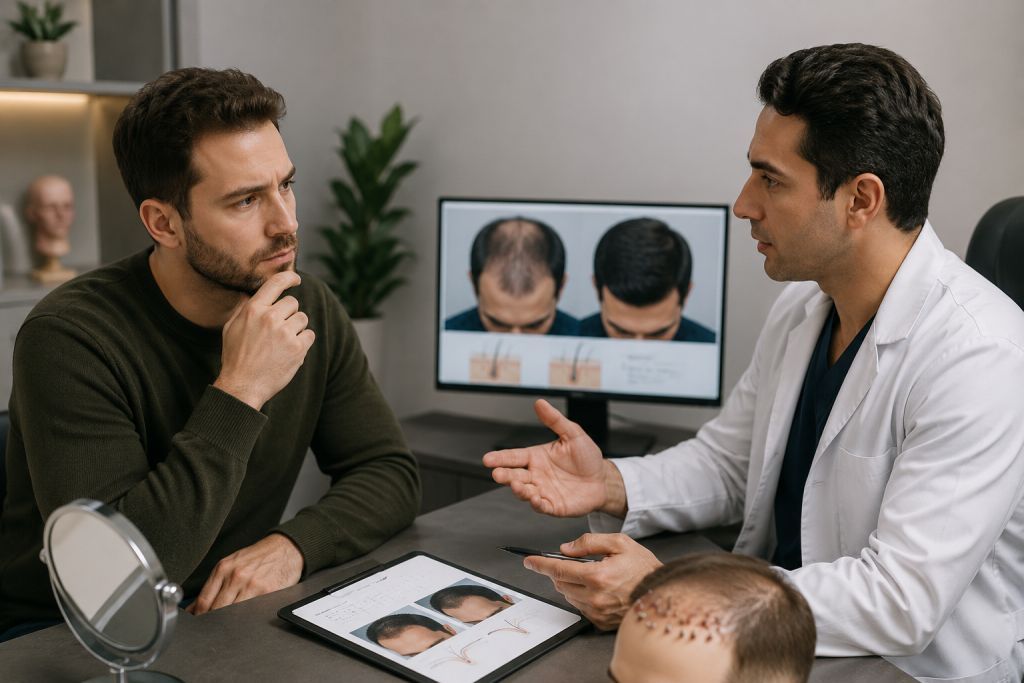
Deciding to undergo a hair transplant is a significant personal and financial investment. While modern hair restoration procedures can produce natural-looking results, the success of a transplant often depends on choosing the right surgeon, understanding realistic expectations, and making informed decisions before treatment.
Many prospective patients focus primarily on cost, but there are numerous other factors that deserve attention. Asking the right questions during a consultation can help you understand the procedure, identify potential risks, compare clinics, and determine whether a hair transplant is the best solution for your situation.
If you're wondering "What questions should I ask before a hair transplant?", this guide covers the most important topics every patient should discuss before moving forward with treatment.
Quick Answer
Before a hair transplant, you should ask questions about:
- Your suitability for the procedure
- The surgeon's qualifications and experience
- FUE vs FUT procedures
- Expected results
- Number of grafts required
- Potential risks and complications
- Recovery timeline
- Total costs and fees
- Long-term hair loss management
- Before-and-after patient results
These questions can help ensure you make an informed and confident decision.
Key Facts
- Hair transplantation does not stop future hair loss.
- Results typically take several months to become visible.
- Surgeon experience significantly affects outcomes.
- Not everyone is a suitable transplant candidate.
- The donor area must have sufficient healthy hair follicles.
- Multiple procedures may sometimes be necessary.
Why Asking Questions Before a Hair Transplant Matters
A hair transplant can produce excellent results when performed appropriately, but unrealistic expectations and poor clinic selection can lead to disappointment.
Asking detailed questions helps patients:
- Understand treatment options
- Compare clinics objectively
- Assess surgeon qualifications
- Evaluate expected outcomes
- Identify hidden costs
- Reduce potential risks
Being informed is one of the best ways to improve the overall treatment experience.
Question #1: Am I a Good Candidate for a Hair Transplant?
This should be one of the first questions asked during a consultation.
Not everyone experiencing hair loss is an ideal candidate.
Factors that may influence eligibility include:
- Age
- Hair loss pattern
- Hair density
- Donor hair availability
- Medical history
- Overall health
A reputable surgeon should explain why you are or are not a suitable candidate.
Question #2: What Is Causing My Hair Loss?
Understanding the cause of hair loss is crucial before pursuing surgical treatment.
Hair loss may result from:
- Genetics
- Hormonal changes
- Medical conditions
- Stress
- Nutritional deficiencies
- Medications
Some causes may require medical treatment rather than surgery.
Question #3: Which Hair Transplant Method Do You Recommend?
Most clinics offer one or both of the following procedures:
- Follicular Unit Extraction (FUE)
- Follicular Unit Transplantation (FUT)
Ask why a specific technique is recommended for your situation.
FUE
- Individual follicle extraction
- Minimal linear scarring
- Popular among modern patients
FUT
- Strip harvesting technique
- May provide larger graft quantities
- Produces a linear donor scar
Question #4: How Many Hair Grafts Will I Need?
The number of grafts significantly affects both cost and expected coverage.
Ask your surgeon:
- How many grafts are recommended?
- Why is that number appropriate?
- Will one procedure be enough?
The answer should be based on your individual hair loss pattern and goals.
Question #5: Who Will Actually Perform the Procedure?
This is one of the most overlooked questions.
Some clinics rely heavily on technicians for portions of the procedure.
Patients should clarify:
- Who designs the hairline?
- Who extracts grafts?
- Who implants grafts?
- How involved is the surgeon?
Understanding the surgical team's responsibilities helps avoid misunderstandings.
Question #6: What Qualifications and Experience Do You Have?
Experience matters significantly in hair restoration.
Questions to ask include:
- How many years have you performed hair transplants?
- How many procedures have you completed?
- Do you specialize in hair restoration?
- What training have you received?
A reputable clinic should be transparent about credentials and experience.
Question #7: Can I See Before-and-After Photos?
Before-and-after photographs help demonstrate a clinic's capabilities.
Ask to see:
- Patients with similar hair loss patterns
- Different stages of recovery
- Long-term results
- High-resolution images
Authentic results can provide realistic expectations.
Question #8: What Results Can I Realistically Expect?
No ethical surgeon should guarantee perfect results.
Ask about:
- Expected density
- Hairline design
- Coverage limitations
- Timeline for growth
Understanding realistic outcomes helps prevent disappointment.
Question #9: How Long Will Results Take to Appear?
Hair transplant results require patience.
Typical timelines include:
- Initial shedding within weeks
- Early growth after several months
- Noticeable improvement after six months
- More complete results after approximately one year
Your surgeon should explain the expected growth timeline.
Question #10: What Risks and Complications Are Possible?
Every medical procedure involves risks.
Potential complications may include:
- Infection
- Swelling
- Bleeding
- Scarring
- Poor graft survival
- Unnatural appearance
Patients should fully understand potential risks before treatment.
Question #11: What Is the Recovery Process Like?
Recovery instructions vary depending on the procedure and individual circumstances.
Important topics include:
- Downtime requirements
- Activity restrictions
- Washing instructions
- Medication use
- Follow-up appointments
Proper aftercare plays an important role in achieving successful results.
Question #12: What Is the Total Cost of the Procedure?
Cost is an important consideration, but it should never be the only factor when choosing a clinic.
Ask for a detailed breakdown that includes:
- Surgical fees
- Consultation fees
- Medications
- Post-operative care
- Follow-up visits
- Additional treatments
Understanding the complete financial commitment helps avoid unexpected expenses later.
Question #13: Are There Any Hidden Fees?
Some clinics advertise low prices but charge additional fees later.
Questions to ask include:
- Are medications included?
- Are follow-up visits included?
- Are touch-up procedures included?
- Are laboratory tests required?
Requesting a written estimate can help improve transparency.
Question #14: Will I Need More Than One Hair Transplant?
Depending on the extent of hair loss and future progression, some patients may require additional procedures.
Ask:
- Will one session likely be enough?
- What happens if my hair loss continues?
- How much donor hair should be preserved for future use?
Long-term planning is an important part of successful hair restoration.
Question #15: Will My Existing Hair Continue to Thin?
A hair transplant does not stop the natural progression of hair loss.
Many patients continue losing non-transplanted hair over time.
Discuss:
- Future hair loss expectations
- Hair preservation strategies
- Long-term treatment options
This helps create a realistic long-term plan.
Question #16: Do You Recommend Additional Hair Loss Treatments?
Many surgeons recommend combining transplantation with other treatments.
Potential options may include:
- Medical therapies
- Scalp treatments
- Lifestyle modifications
- Nutritional improvements
Additional treatments may help preserve existing hair and improve overall results.
Question #17: What Happens If I Am Not Satisfied With the Results?
Although many patients are satisfied with their outcomes, it is important to discuss expectations beforehand.
Ask:
- What is your revision policy?
- Are corrective procedures available?
- How are concerns handled?
Understanding clinic policies can provide peace of mind.
Question #18: Can I Speak With Previous Patients?
Some clinics may be able to connect prospective patients with former clients.
Patient experiences can provide valuable insight into:
- The consultation process
- Procedure experience
- Recovery expectations
- Long-term satisfaction
While not every clinic offers this option, it can be extremely informative.
Hair Transplant Statistics
Understanding industry trends can help patients make informed decisions.
- Hair transplantation has become increasingly popular worldwide due to advancements in surgical techniques.
- FUE is one of the most commonly performed modern hair restoration procedures.
- Results generally require several months before noticeable growth becomes visible.
- Patient satisfaction is often highest when expectations are realistic and surgeon selection is carefully considered.
- Long-term planning is becoming a greater focus in modern hair restoration.
Hair Transplant Consultation Checklist
| Question | Why It Matters |
|---|---|
| Am I a good candidate? | Determines eligibility |
| What is causing my hair loss? | Identifies underlying issues |
| Which procedure is recommended? | Helps compare treatment options |
| How many grafts are needed? | Impacts cost and coverage |
| Who performs the procedure? | Clarifies surgeon involvement |
| What experience do you have? | Assesses qualifications |
| What results can I expect? | Creates realistic expectations |
| What are the risks? | Supports informed consent |
| What is the total cost? | Avoids financial surprises |
| Will I need future procedures? | Supports long-term planning |
Benefits of Asking the Right Questions
Patients who actively participate in consultations often make more informed decisions.
Benefits include:
- Better understanding of treatment options
- More realistic expectations
- Improved surgeon selection
- Reduced risk of disappointment
- Greater confidence in decision-making
- Enhanced long-term planning
Red Flags to Watch For During a Consultation
Certain warning signs may indicate that additional research is needed before proceeding.
- Guaranteed results
- Pressure to schedule immediately
- Lack of transparency regarding costs
- Unclear surgeon involvement
- Limited discussion of risks
- Few verifiable patient results
- Unrealistic promises regarding density
A reputable clinic should encourage questions and provide clear, honest answers.
Pros and Cons of Hair Transplant Surgery
| Pros | Cons |
|---|---|
| Can improve appearance | Requires financial investment |
| Uses natural hair | Results take time |
| Long-lasting results | Potential surgical risks |
| May improve confidence | Future hair loss may continue |
| Modern techniques can look natural | May require additional procedures |
How to Choose the Right Hair Transplant Clinic
Choosing a clinic involves more than comparing prices.
Consider:
- Surgeon credentials
- Experience level
- Patient reviews
- Before-and-after results
- Consultation quality
- Transparency
- Long-term treatment planning
The right clinic should prioritize patient education and realistic expectations.
Frequently Asked Questions
What questions should I ask before a hair transplant?
You should ask about candidacy, surgeon experience, procedure type, graft numbers, costs, risks, recovery, and expected outcomes.
How do I know if I am a good candidate?
A specialist can evaluate your donor hair supply, hair loss pattern, health status, and long-term goals.
How many grafts will I need?
The number depends on the extent of hair loss and desired coverage.
Should I ask who performs the procedure?
Yes. Understanding the roles of the surgeon and supporting staff is important.
Can a hair transplant stop future hair loss?
No. A transplant restores hair to specific areas but does not prevent ongoing hair loss elsewhere.
How long do results take?
Noticeable growth often begins within several months, while fuller results may take approximately one year.
Are hair transplant results permanent?
Transplanted follicles are generally long-lasting, although overall hair loss patterns may continue to change over time.
Summary
Before undergoing a hair transplant, patients should ask detailed questions about candidacy, surgeon qualifications, procedure options, graft requirements, expected results, recovery, risks, costs, and long-term planning. Understanding these factors helps create realistic expectations and improves the likelihood of a successful outcome. A thorough consultation is one of the most important steps in the hair restoration process.
Conclusion
Hair transplantation can be an effective solution for suitable candidates, but success depends on informed decision-making. Asking the right questions allows patients to better understand their options, evaluate clinics objectively, and prepare for both the procedure and the recovery process.
Rather than focusing solely on cost, prospective patients should prioritize surgeon experience, realistic expectations, transparency, and long-term hair restoration planning. Taking the time to gather information before treatment can significantly improve satisfaction and help achieve more natural-looking results.