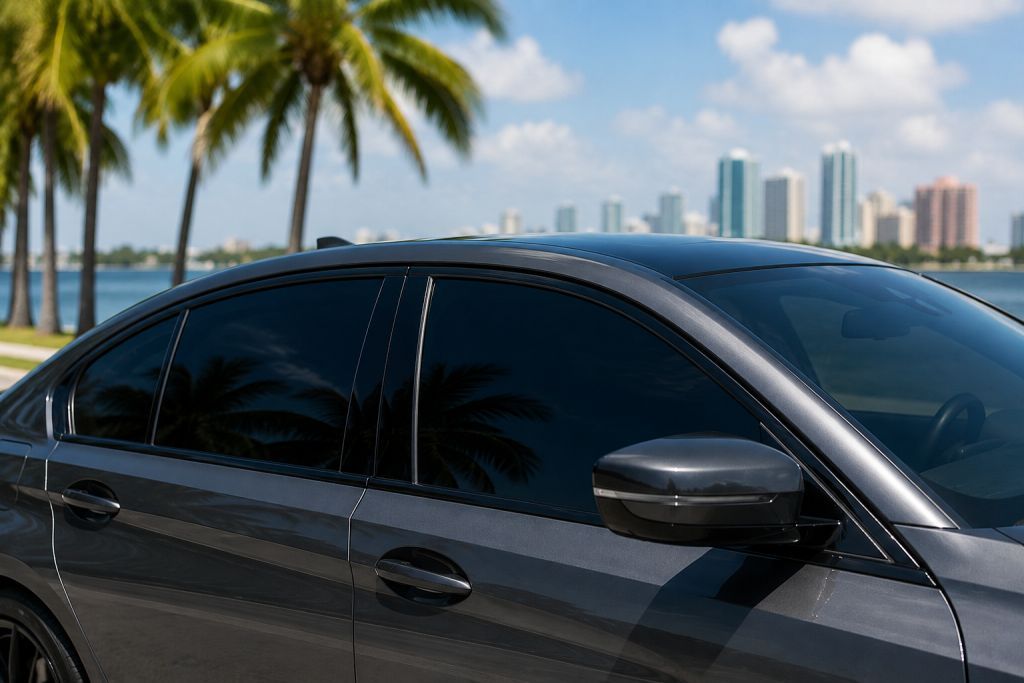
Florida is known for its intense sunlight, high temperatures, and year-round heat. Because of this, many vehicle owners install window tint to reduce glare, improve privacy, block UV rays, and keep vehicle interiors cooler.
However, Florida has specific laws regulating how dark vehicle window tint can be. Drivers who install tint that exceeds legal limits may face citations, fines, and requirements to remove the illegal tint.
If you're wondering what is the legal tint in Florida, the answer depends on the type of vehicle, the window location, and the visible light transmission percentage of the tint.
This guide explains Florida window tint laws, legal tint percentages, windshield rules, medical exemptions, penalties, and frequently asked questions.
Quick Answer
Florida law generally requires:
- Front side windows: More than 28% visible light transmission (VLT)
- Rear side windows (sedans): More than 15% VLT
- Rear window (sedans): More than 15% VLT
- Rear side windows (SUVs and vans): More than 6% VLT
- Rear window (SUVs and vans): More than 6% VLT
- Windshield tint: Only non-reflective tint above the AS-1 line
Florida tint laws are primarily governed by Florida Statutes Sections 316.2953 and 316.2954.
What Does VLT Mean?
Florida tint laws use a measurement called Visible Light Transmission (VLT).
VLT refers to the percentage of visible light that passes through a window.
- Higher VLT percentage = lighter tint
- Lower VLT percentage = darker tint
Examples:
- 70% VLT allows most light through
- 35% VLT is moderately dark
- 20% VLT is darker
- 5% VLT is extremely dark ("limo tint")
Florida law specifies minimum VLT percentages for different windows.
Legal Tint for Sedans in Florida
For standard passenger vehicles such as sedans and coupes, Florida law establishes different tint limits depending on window location.
Front Side Windows
Front side windows must allow more than 28% of visible light to pass through.
This means tint darker than the legal limit may result in a violation.
Rear Side Windows
Rear side windows on sedans must allow more than 15% visible light transmission.
Rear Window
The rear windshield on sedans must also allow more than 15% visible light transmission.
Legal Tint for SUVs, Vans, and Trucks in Florida
Florida provides slightly different tint allowances for multipurpose vehicles such as SUVs, vans, and some trucks.
Front Side Windows
Front side windows must still allow more than 28% visible light transmission.
Rear Side Windows
Rear side windows may be significantly darker and must allow more than 6% visible light transmission.
Rear Window
The rear window may also allow more than 6% visible light transmission.
This allows much darker tint on the rear portions of SUVs and vans compared to standard sedans.
Florida Windshield Tint Laws
Florida has special rules regarding windshield tint.
Generally, non-reflective tint is only permitted above the manufacturer's AS-1 line.
The AS-1 line is a marking placed near the top of the windshield by the manufacturer.
Tint below the AS-1 line is generally prohibited unless a valid medical exemption applies.
Reflective Tint Restrictions
Florida law also limits how reflective window tint may be.
Reflective or mirrored tint can create visibility issues for other drivers.
Front Side Windows
Front side windows generally cannot exceed 25% reflectivity.
Rear Side Windows
Rear side windows generally cannot exceed 35% reflectivity.
Highly reflective mirror-style tint is typically not permitted.
Illegal Tint Colors in Florida
Florida law restricts certain tint colors that may interfere with visibility or resemble emergency vehicle lighting.
Commonly restricted tint colors may include:
- Red
- Blue
- Certain highly reflective metallic shades
Most drivers choose neutral tint colors such as:
- Charcoal
- Black
- Gray
- Ceramic tint finishes
Is 20% Tint Legal in Florida?
This is one of the most common questions drivers ask.
Generally:
- 20% tint is not legal on front side windows
- 20% tint is generally legal on rear windows where legal limits allow darker tint
Because front side windows must allow more than 28% visible light transmission, 20% tint usually falls below the legal threshold.
Is 15% Tint Legal in Florida?
The answer depends on the location of the tint.
- 15% tint is generally not legal on front side windows
- 15% tint may be legal on rear windows of sedans
- 15% tint is generally legal on rear windows of SUVs and vans
Vehicle type and window location both affect legality.
Can You Have 5% Tint in Florida?
5% tint is often called "limo tint" because it is extremely dark.
For most passenger vehicles:
- 5% tint is not legal on front side windows
- 5% tint is generally darker than allowed for sedan rear windows
- Certain SUVs and vans may come closer to these limits depending on the window location and applicable regulations
Drivers should verify compliance before installation because extremely dark tint can lead to enforcement actions.
Medical Window Tint Exemptions in Florida
Florida recognizes that certain medical conditions may require additional protection from sunlight and ultraviolet (UV) exposure. For this reason, the state allows qualifying individuals to apply for a medical exemption from standard window tint restrictions.
Who May Qualify for a Medical Exemption?
Individuals with specific medical conditions that increase sensitivity to sunlight may qualify for an exemption. Examples may include:
- Lupus
- Photosensitivity disorders
- Certain skin conditions
- Medical conditions requiring protection from UV exposure
- Other qualifying physician-documented conditions
A licensed physician must typically certify the medical need before an exemption can be approved.
How to Obtain a Medical Exemption
Drivers generally must submit the required application and supporting medical documentation to the appropriate Florida authorities.
Approval requirements can change, so applicants should consult current Florida regulations before applying.
What Happens If Your Tint Is Too Dark?
If law enforcement determines that your vehicle's window tint violates Florida law, you may receive a citation.
In many situations, drivers may be required to:
- Remove the illegal tint
- Correct the violation
- Pay applicable fines
- Provide proof of compliance
The specific consequences can vary depending on the circumstances and local enforcement practices.
How Police Check Window Tint in Florida
Law enforcement officers often use specialized tint meters to determine whether a vehicle complies with Florida's visible light transmission requirements.
These devices measure the amount of light passing through the window and tint film.
If the measured VLT falls below the legal minimum, the vehicle may be considered non-compliant.
Factory Tint vs Aftermarket Tint
Many vehicles come from the manufacturer with factory-installed tinted glass.
Factory tint differs from aftermarket tint film because the tint is incorporated into the glass during manufacturing.
Factory Tint
- Installed by the manufacturer
- Usually common on SUVs and vans
- Often darker on rear windows
- Designed to comply with applicable regulations
Aftermarket Tint
- Applied after vehicle purchase
- Available in various darkness levels
- Must comply with Florida law
- Can affect total VLT percentage
Drivers should remember that adding film to already tinted glass may reduce VLT below legal limits.
Is Ceramic Tint Legal in Florida?
Yes.
Ceramic tint is legal in Florida provided the final tint installation complies with state VLT and reflectivity requirements.
Ceramic tint has become increasingly popular because it offers:
- Excellent heat rejection
- UV protection
- Reduced glare
- Minimal signal interference
- Long-term durability
The type of tint material is generally less important than whether the final installation complies with Florida law.
Benefits of Legal Window Tint in Florida
Many drivers install legal window tint because of the significant benefits it provides.
Heat Reduction
Florida's climate can create extremely high interior vehicle temperatures. Window tint helps reduce heat buildup.
UV Protection
Quality window tint can block a substantial percentage of harmful ultraviolet rays.
Improved Comfort
Reduced heat and glare can make driving more comfortable.
Interior Protection
Tint may help reduce fading and damage to vehicle interiors caused by prolonged sun exposure.
Enhanced Privacy
Darker legal tint can provide additional privacy for passengers and personal belongings.
Common Mistakes Drivers Make
Many Florida drivers unintentionally violate tint laws because they misunderstand the regulations.
Choosing Tint Based Only on Appearance
Some drivers select the darkest tint available without considering legal requirements.
Ignoring Factory Tint Levels
Adding aftermarket film to factory-tinted windows can result in illegal VLT percentages.
Using Out-of-State Standards
Tint laws vary significantly between states. A tint legal in another state may not be legal in Florida.
Assuming All SUVs Have Unlimited Tint Freedom
While SUVs and vans often have more flexibility for rear windows, front side windows remain subject to Florida's legal limits.
Best Legal Tint Options for Florida Drivers
Drivers seeking compliance and performance often choose tint options that balance comfort, visibility, and legal requirements.
Popular choices include:
- 30% ceramic tint for front side windows
- 35% ceramic tint for front windows
- 15% tint on legal rear sedan windows
- Darker legal rear SUV tint options
- High-performance infrared-blocking ceramic films
Many professional installers can recommend products that comply with Florida regulations while maximizing heat rejection.
Florida Window Tint Law Summary
| Window | Sedan | SUV / Van |
|---|---|---|
| Front Side Windows | More than 28% VLT | More than 28% VLT |
| Rear Side Windows | More than 15% VLT | More than 6% VLT |
| Rear Window | More than 15% VLT | More than 6% VLT |
| Windshield | Above AS-1 line only | Above AS-1 line only |
Frequently Asked Questions
What is the darkest legal tint in Florida?
For most passenger vehicles, front side windows must allow more than 28% visible light transmission. Rear window limits vary based on vehicle type.
Is 35% tint legal in Florida?
Yes. In most situations, 35% tint is legal for front side windows because it exceeds the minimum visible light transmission requirement.
Is 20% tint legal in Florida?
Generally no for front side windows. However, it may be legal on certain rear windows depending on the vehicle type.
Can you tint your entire windshield in Florida?
No. Florida generally only permits non-reflective tint above the AS-1 line on the windshield unless a valid medical exemption applies.
Can police stop you for illegal tint?
Yes. Law enforcement officers may stop vehicles if they believe the tint violates Florida law.
Is ceramic tint worth it in Florida?
Many drivers believe ceramic tint is worth the investment because of its excellent heat rejection, UV protection, and durability.
Do Florida tint laws apply to out-of-state vehicles?
Out-of-state vehicles are generally governed by their home state's registration requirements, although specific situations may vary.
Final Answer: What Is the Legal Tint in Florida?
The legal window tint in Florida depends on the vehicle type and window location.
For most vehicles:
- Front side windows must allow more than 28% visible light transmission.
- Sedan rear windows must allow more than 15% visible light transmission.
- SUV and van rear windows must allow more than 6% visible light transmission.
- Windshield tint is generally limited to the area above the AS-1 line.
Florida's tint laws are designed to balance privacy, heat reduction, and road safety. Before installing window tint, drivers should verify compliance with current regulations and consult a professional installer familiar with Florida law.