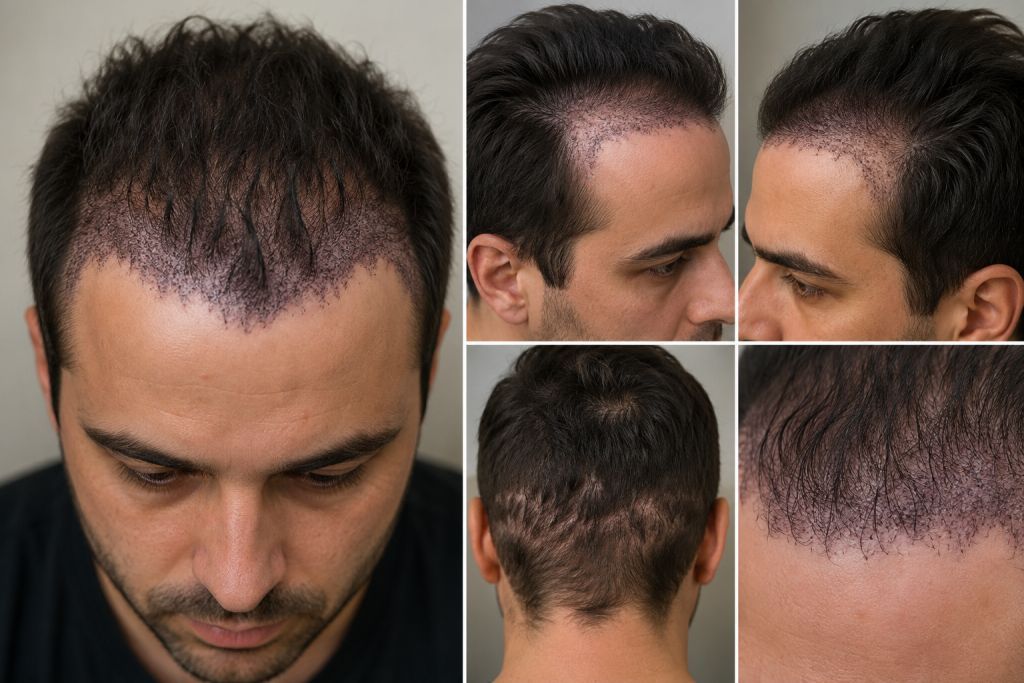
Hair transplant surgery has advanced dramatically over the past few decades. Modern techniques such as Follicular Unit Extraction (FUE) and Follicular Unit Transplantation (FUT) can produce highly natural-looking results when performed by experienced surgeons.
However, not every procedure delivers the desired outcome. Some patients experience results that appear unnatural, lack density, or fail to meet expectations. In severe cases, poor surgical planning or technical mistakes can create noticeable cosmetic problems.
Understanding what a bad hair transplant looks like can help patients evaluate results realistically, choose qualified surgeons, and recognize when corrective treatment may be necessary.
This guide explores the most common signs of a bad hair transplant, why poor results happen, and what options may be available for correction.
Quick Answer
A bad hair transplant may show one or more of the following characteristics:
- Unnatural hairline placement
- Pluggy or doll-like appearance
- Poor density
- Visible gaps between grafts
- Incorrect hair growth direction
- Excessive scarring
- Uneven results
- Poor graft survival
- Patchy growth
- Noticeable cosmetic abnormalities
Modern hair transplantation aims to create natural density, proper hairline design, and seamless integration with existing hair.
Key Facts
- Most modern hair transplants produce natural results.
- Poor hairline design is a common cause of dissatisfaction.
- Low graft survival can affect density.
- Hair direction and angle are critical for natural appearance.
- Many bad hair transplants can be improved through corrective procedures.
- Choosing an experienced surgeon significantly reduces risk.
What Is Considered a Bad Hair Transplant?
A bad hair transplant is generally one that produces an unnatural appearance, inadequate cosmetic improvement, or significant patient dissatisfaction.
Potential problems may involve:
- Technical surgical errors
- Poor planning
- Improper graft placement
- Low graft survival
- Unsuitable hairline design
The severity can range from mild cosmetic concerns to major corrective challenges.
Sign #1: An Unnatural Hairline
The hairline is often the most important aspect of a successful hair transplant.
A poorly designed hairline may appear:
- Too low
- Too straight
- Artificially symmetrical
- Age-inappropriate
- Visibly unnatural
Modern hairlines typically include subtle irregularities that mimic natural growth patterns.
Sign #2: Pluggy or Doll-Like Appearance
Older transplant techniques sometimes produced a "pluggy" appearance.
This may occur when:
- Large grafts are used incorrectly
- Hair grouping appears unnatural
- Hair density is distributed poorly
- Hairline grafts are too thick
The result may resemble rows of visible plugs rather than natural hair growth.
Sign #3: Poor Density
Some transplants achieve growth but fail to provide sufficient coverage.
Low density may result from:
- Insufficient graft numbers
- Poor graft survival
- Large treatment areas
- Inadequate planning
Patients may still see improvement while remaining dissatisfied with overall fullness.
Sign #4: Visible Scalp Between Grafts
Excessive spacing between transplanted follicles can create a thin or patchy appearance.
This issue may become especially noticeable:
- Under bright lighting
- With wet hair
- When styling the hair
Proper density planning helps reduce this problem.
Sign #5: Incorrect Hair Direction
Natural hair grows at specific angles and directions.
If grafts are placed incorrectly, hair may:
- Grow outward unnaturally
- Stick up awkwardly
- Appear difficult to style
- Create visual irregularities
Hair direction mistakes are often noticeable even when graft survival is good.
Sign #6: Uneven Growth Patterns
In some cases, transplanted hair grows inconsistently.
Possible issues include:
- Patchy density
- Uneven coverage
- Irregular growth zones
- Asymmetrical appearance
These problems may become more obvious as the transplant matures.
Sign #7: Excessive Scarring
Although some degree of scarring is expected after surgery, excessive scarring may affect cosmetic outcomes.
Potential concerns include:
- Wide FUT scars
- Visible donor area damage
- Uneven donor extraction patterns
- Scalp irregularities
Scarring concerns vary depending on technique and healing characteristics.
Signs of a Good vs Bad Hair Transplant
| Good Hair Transplant | Bad Hair Transplant |
|---|---|
| Natural hairline | Artificial hairline |
| Natural density | Sparse or patchy density |
| Correct hair direction | Abnormal hair direction |
| Minimal visible scarring | Noticeable scarring |
| Balanced appearance | Unnatural appearance |
| High patient satisfaction | Significant dissatisfaction |
Common Hair Transplant Mistakes
Several technical and planning errors can contribute to poor outcomes.
- Overharvesting donor hair
- Incorrect graft placement
- Poor hairline design
- Inadequate density planning
- Improper angle creation
- Excessive graft trauma
These mistakes often become more noticeable as healing progresses.
Why Some Bad Hair Transplants Occur
Poor results can result from multiple factors.
Common causes include:
- Inexperienced surgeons
- Outdated techniques
- Poor candidate selection
- Unrealistic expectations
- Technical errors
- Low graft survival
Proper planning and surgeon expertise are among the most important factors influencing outcomes.
Hairline Design Errors Explained
Hairline design mistakes often create the most obvious cosmetic problems.
Examples include:
- Hairline positioned too low
- Flat or straight hairline shape
- Excessive symmetry
- Failure to consider aging patterns
- Poor facial proportion matching
A well-designed hairline typically appears natural and age appropriate.
Hair Transplant Statistics and Industry Trends
Hair transplantation has become increasingly sophisticated, with modern FUE and FUT procedures producing highly natural results when performed correctly.
- Patient satisfaction rates are generally high when procedures are performed by experienced surgeons.
- Modern follicular unit techniques have largely replaced older plug-style transplants.
- Hairline design is one of the most important factors affecting cosmetic success.
- Corrective hair transplant procedures have become increasingly common for repairing older or poorly executed surgeries.
- Long-term success depends on both surgical skill and ongoing hair loss management.
Although poor outcomes can occur, advances in technology and surgical planning have significantly reduced the frequency of severe cosmetic problems.
Sign #8: Patchy Growth or Poor Graft Survival
One of the clearest indicators of a problematic transplant is poor graft survival.
This may result in:
- Visible empty areas
- Uneven density
- Sparse coverage
- Noticeable gaps within the transplant zone
Poor graft survival can be caused by surgical issues, healing complications, or underlying scalp conditions.
Sign #9: Overharvested Donor Area
The donor area should maintain a natural appearance after graft extraction.
Overharvesting may create:
- Visible thinning in the donor zone
- Moth-eaten appearance
- Uneven density
- Difficulty wearing short hairstyles
Proper donor management is critical for both current and future procedures.
Sign #10: Unnatural Density Distribution
Even when hair grows successfully, poor density distribution can create unnatural results.
Examples include:
- Dense hairline with sparse areas behind it
- Inconsistent coverage patterns
- Abrupt density transitions
- Visible design irregularities
Natural density should transition gradually across the scalp.
Sign #11: Visible Rows of Grafts
Natural hair does not grow in perfectly straight rows.
When grafts are implanted using obvious patterns, the result may appear artificial.
This problem may be particularly noticeable:
- In bright lighting
- With wet hair
- When viewed up close
Modern techniques generally avoid obvious row placement.
Can a Bad Hair Transplant Be Fixed?
In many cases, yes.
Corrective hair restoration procedures can often improve:
- Unnatural hairlines
- Poor density
- Visible scarring
- Incorrect hair direction
- Pluggy appearances
- Donor area concerns
The complexity of correction depends on the severity of the original problem.
Hair Transplant Repair Options
| Problem | Potential Repair Option |
|---|---|
| Low density | Additional graft placement |
| Unnatural hairline | Hairline revision |
| Visible plugs | Graft redistribution |
| Scarring | Scar revision procedures |
| Incorrect direction | Corrective transplantation |
| Overharvested donor area | Strategic camouflage techniques |
Factors That Affect Corrective Success
Not every poor transplant can be corrected equally.
Success often depends on:
- Remaining donor hair availability
- Scalp condition
- Extent of previous surgery
- Scar severity
- Patient expectations
- Surgeon expertise
Early evaluation by an experienced hair restoration specialist may improve treatment planning.
How to Avoid a Bad Hair Transplant
Prevention is often easier than correction.
Helpful strategies include:
- Researching surgeon credentials
- Reviewing before-and-after results
- Seeking multiple consultations
- Understanding realistic outcomes
- Avoiding decisions based solely on price
- Discussing long-term hair loss planning
Choosing an experienced surgeon remains one of the most important decisions a patient can make.
When Should You Seek a Corrective Consultation?
You may benefit from a consultation if you experience:
- Persistent dissatisfaction
- Unnatural appearance
- Visible plug-like grafts
- Poor density after full maturation
- Significant scarring
- Hairline concerns
Most surgeons recommend waiting until the transplant has fully matured before considering corrective treatment.
Pros and Cons of Corrective Hair Transplant Procedures
| Pros | Cons |
|---|---|
| Can improve appearance | Additional surgery required |
| May restore confidence | Added cost |
| Can correct major design flaws | Limited donor resources |
| May improve density | Recovery time required |
| Modern techniques can create natural results | Results vary by individual case |
Common Myths About Bad Hair Transplants
Myth #1: Every Thin Result Is a Failed Transplant
Not necessarily. Some patients have realistic growth but lower density than expected.
Myth #2: Bad Hair Transplants Cannot Be Fixed
Many poor outcomes can be improved with corrective procedures.
Myth #3: FUE Eliminates All Risks
Both FUE and FUT require proper planning and execution to achieve natural results.
Myth #4: More Grafts Always Mean Better Results
Proper placement and design are often more important than graft count alone.
Frequently Asked Questions
What does a bad hair transplant look like?
A bad hair transplant may appear unnatural, pluggy, sparse, uneven, poorly directed, or visibly scarred.
How can I tell if my hair transplant looks unnatural?
Common signs include a straight hairline, obvious graft patterns, incorrect hair direction, or poor density distribution.
Can a bad hair transplant be repaired?
Many poor outcomes can be improved through corrective hair restoration procedures.
What causes a bad hair transplant?
Common causes include poor planning, inexperienced surgeons, outdated techniques, inadequate graft survival, and unrealistic expectations.
How long should I wait before judging my transplant?
Most surgeons recommend waiting at least 12 months, and sometimes up to 18 months, for final results.
Can donor area damage be fixed?
Some donor area concerns can be improved through camouflage strategies or additional corrective procedures.
Are bad hair transplants common today?
Severe failures are less common today due to improvements in surgical techniques and training.
Summary
A bad hair transplant may be characterized by unnatural hairlines, poor density, visible scarring, plug-like grafts, incorrect hair direction, patchy growth, or donor area damage. While modern procedures generally produce natural-looking outcomes, poor planning and surgical mistakes can still occur. Fortunately, many unsatisfactory results can be improved through corrective treatments, especially when evaluated by experienced hair restoration specialists.
Conclusion
Modern hair transplantation has evolved significantly, making severe cosmetic failures less common than in previous decades. Nevertheless, poor results can still occur due to surgical errors, inadequate planning, unrealistic expectations, or biological factors affecting healing and growth.
Understanding the warning signs of a bad hair transplant helps patients make informed decisions, choose qualified providers, and seek corrective care when necessary. With proper planning and expert surgical execution, most patients can achieve natural, long-lasting hair restoration results.
Sources
- International Society of Hair Restoration Surgery (ISHRS)
- American Academy of Dermatology (AAD)
- National Center for Biotechnology Information (NCBI)
- National Institutes of Health (NIH)
- MedlinePlus
- Cleveland Clinic
- Mayo Clinic
- Harvard Health Publishing
- National Institute of Arthritis and Musculoskeletal and Skin Diseases (NIAMS)
- U.S. Food and Drug Administration (FDA)