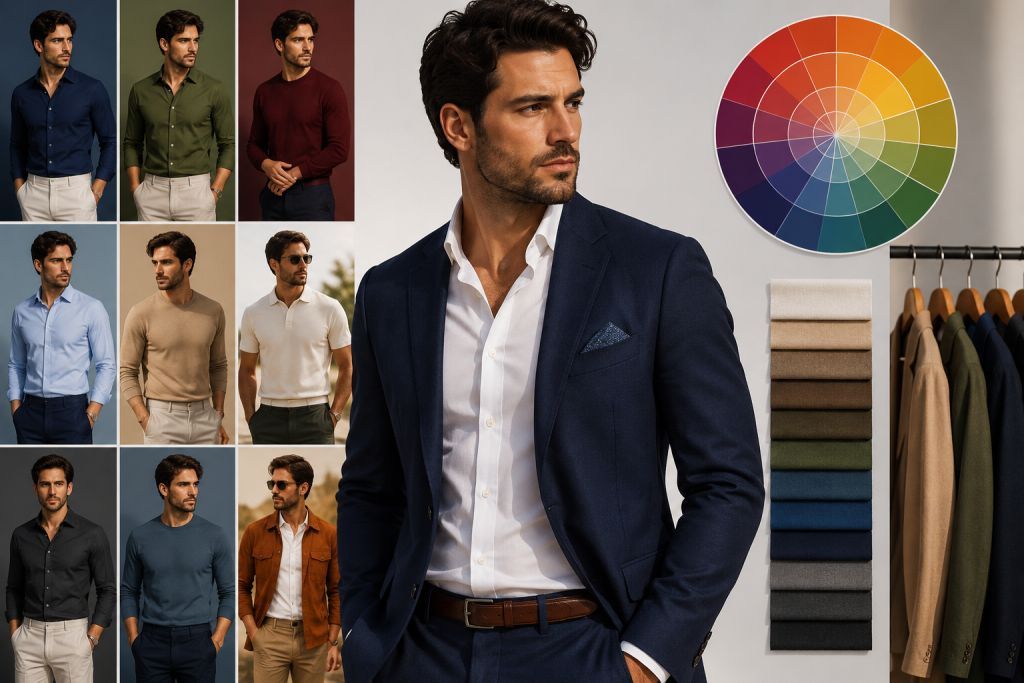
Color is one of the most powerful tools in men's fashion. The right color can enhance your appearance, boost confidence, create stronger first impressions, and make outfits look more expensive and intentional. On the other hand, the wrong colors can wash out your complexion, clash with your features, or make even expensive clothing look less appealing.
Many men focus heavily on fit and style while overlooking the importance of color. However, understanding which colors work best for your skin tone, hair color, eye color, and personal style can dramatically improve your overall appearance.
The good news is that you don't need to memorize complicated fashion rules. A small selection of well-chosen colors can create a wardrobe that looks stylish, versatile, and attractive year-round.
This guide explores the best colors for men, how to choose colors based on your complexion, and how to build a wardrobe around timeless color combinations.
Quick Answer: What Colors Look Best on Men?
The most universally flattering colors for men include:
- Navy Blue
- White
- Charcoal Gray
- Olive Green
- Black
- Beige
- Camel
- Brown
- Burgundy
- Forest Green
These colors work well because they complement a wide range of skin tones and can be combined easily to create attractive outfits.
Why Color Matters in Men's Fashion
Color affects how people perceive you. Different colors communicate different qualities and emotions.
For example:
- Navy suggests confidence and professionalism.
- Black conveys sophistication and authority.
- White communicates cleanliness and simplicity.
- Olive green appears rugged and masculine.
- Burgundy adds depth and refinement.
Choosing colors strategically allows you to influence first impressions while enhancing your natural features.
Key Color Statistics in Men's Fashion
| Color | Versatility Rating |
|---|---|
| Navy Blue | Excellent |
| White | Excellent |
| Charcoal Gray | Excellent |
| Olive Green | Very High |
| Black | Very High |
| Beige | Very High |
| Brown | High |
| Burgundy | High |
Navy Blue: The Most Versatile Color for Men
If every man could choose only one color for his wardrobe, navy blue would be the strongest option.
Navy works because it:
- Flatters nearly every skin tone
- Looks professional
- Works year-round
- Pairs with most colors
- Appears sophisticated without being overly formal
Navy suits, blazers, shirts, knitwear, and outerwear remain wardrobe staples because of their versatility.
White Creates Clean and Timeless Style
White remains one of the most important colors in men's fashion. It provides contrast, brightness, and simplicity.
Essential white wardrobe items include:
- Oxford shirts
- Crew-neck T-shirts
- Sneakers
- Casual shirts
White pairs exceptionally well with navy, gray, olive, black, and beige.
Charcoal Gray Offers Maximum Flexibility
Charcoal gray combines the sophistication of black with greater versatility. It works in professional, formal, and casual environments.
Popular gray wardrobe pieces include:
- Tailored trousers
- Suits
- Knitwear
- T-shirts
- Outerwear
Gray serves as an excellent foundation color because it rarely clashes with other wardrobe items.
Olive Green Enhances Masculine Style
Olive green has become one of the most popular colors in modern menswear. It offers a rugged yet refined appearance that works across multiple styles.
Olive is particularly effective in:
- Field jackets
- Utility shirts
- Chinos
- Outerwear
- Casual overshirts
It pairs especially well with white, beige, navy, and brown.
Black Adds Sophistication and Authority
Black remains one of the most powerful colors in men's wardrobes. It is often associated with elegance, confidence, and authority.
Black works particularly well in:
- Formalwear
- Outerwear
- Footwear
- Knitwear
- Minimalist outfits
While versatile, black should often be balanced with lighter tones to create visual contrast.
Beige and Camel Create Modern Sophistication
Neutral earth tones continue to dominate modern menswear. Beige and camel provide warmth and sophistication while remaining easy to style.
Popular pieces include:
- Chinos
- Trench coats
- Knitwear
- Overshirts
- Tailored trousers
These colors work especially well in spring and fall wardrobes.
Best Colors for Fair Skin Tones
Men with lighter skin tones often look best in colors that create contrast.
Recommended Colors
- Navy Blue
- Burgundy
- Forest Green
- Charcoal Gray
- Dark Brown
Extremely pale colors can sometimes wash out fair complexions.
Best Colors for Medium Skin Tones
Medium skin tones typically have the greatest flexibility.
Recommended Colors
- Olive Green
- Navy Blue
- White
- Beige
- Burgundy
- Camel
Most classic menswear colors work exceptionally well with medium complexions.
Best Colors for Dark Skin Tones
Darker skin tones can often wear both bold and neutral colors effectively.
Recommended Colors
- White
- Cream
- Cobalt Blue
- Burgundy
- Olive Green
- Camel
- Mustard
Strong contrast often creates particularly striking results.
Understanding Warm and Cool Undertones
Skin undertones also influence which colors appear most flattering.
Warm Undertones
- Olive Green
- Camel
- Brown
- Mustard
- Rust
Cool Undertones
- Navy Blue
- Charcoal Gray
- White
- Burgundy
- Forest Green
Understanding undertones can help refine wardrobe choices and improve overall style.
Men's Color Comparison Table
| Color | Versatility | Best For | Style Impact |
|---|---|---|---|
| Navy Blue | Excellent | All Occasions | Professional & Confident |
| White | Excellent | Casual & Formal | Clean & Timeless |
| Charcoal Gray | Excellent | Business & Formal | Sophisticated |
| Olive Green | Very High | Casual & Smart Casual | Masculine & Modern |
| Black | Very High | Formal & Evening Wear | Powerful & Elegant |
| Beige | Very High | Spring & Summer | Refined & Relaxed |
| Burgundy | High | Fall & Winter | Rich & Stylish |
| Camel | High | Outerwear | Luxurious & Classic |
Benefits of Choosing the Right Colors
| Benefit | Description |
|---|---|
| Improved Appearance | Enhances skin tone and facial features. |
| Higher Confidence | Looking better often increases self-confidence. |
| Better Outfit Coordination | Creates a more polished wardrobe. |
| Stronger First Impressions | Colors influence perception and professionalism. |
| Greater Wardrobe Versatility | Neutral colors work with more outfit combinations. |
| Timeless Style | Classic colors remain fashionable for years. |
Pros and Cons of Neutral Color Wardrobes
| Pros | Cons |
|---|---|
| Easy outfit matching | Can feel repetitive |
| Timeless appearance | Less visual variety |
| Works for most occasions | May appear conservative |
| Reduces shopping mistakes | Requires occasional accent colors |
| Improves wardrobe versatility | Can become predictable if overused |
Best Color Combinations for Men
The most stylish outfits often rely on proven color combinations rather than random color choices.
Navy and White
- Navy blazer
- White Oxford shirt
- Dark denim
A timeless combination suitable for nearly every occasion.
Olive and Beige
- Olive overshirt
- Beige chinos
- White sneakers
Perfect for casual and smart-casual outfits.
Gray and Black
- Gray knitwear
- Black trousers
- Black boots
Creates a sophisticated and modern appearance.
Brown and Navy
- Navy blazer
- Brown loafers
- White shirt
One of the strongest business casual combinations.
Camel and White
- Camel coat
- White knitwear
- Dark trousers
Provides contrast while maintaining elegance.
Seasonal Color Guide for Men
Spring Colors
- Light Blue
- Beige
- Olive Green
- White
- Stone Gray
Summer Colors
- White
- Cream
- Light Blue
- Sand
- Light Olive
Fall Colors
- Burgundy
- Olive Green
- Camel
- Brown
- Rust
Winter Colors
- Navy Blue
- Charcoal Gray
- Black
- Forest Green
- Deep Burgundy
Colors That Make Men Look More Attractive
Although personal style matters most, certain colors consistently rank among the most attractive choices for men.
Top Attractive Colors
- Navy Blue
- White
- Charcoal Gray
- Olive Green
- Black
- Burgundy
- Camel
These colors project confidence, sophistication, and versatility while complementing a wide range of skin tones.
Common Color Mistakes Men Should Avoid
- Wearing colors that clash with skin tone
- Using too many bright colors in one outfit
- Ignoring color balance
- Overusing black
- Wearing washed-out shades that reduce contrast
- Mixing too many statement colors
- Building a wardrobe without neutral foundations
- Following color trends without considering versatility
Most stylish wardrobes are built around neutral colors with occasional accent colors for personality.
How to Build a Color-Coordinated Wardrobe
The easiest approach is to start with neutral foundations and gradually add accent colors.
Core Colors
- Navy
- White
- Gray
- Black
- Beige
Accent Colors
- Olive Green
- Burgundy
- Forest Green
- Light Blue
- Camel
This strategy creates a wardrobe where nearly every item works with every other item.
Featured Snippet: What Colors Look Best on Men?
The colors that look best on men are navy blue, white, charcoal gray, olive green, black, beige, camel, and burgundy. These colors are versatile, complement most skin tones, create attractive outfit combinations, and remain stylish regardless of changing fashion trends.
Frequently Asked Questions
1. What color looks best on most men?
Navy blue is often considered the most universally flattering color.
2. What is the most attractive color for men?
Navy blue consistently ranks among the most attractive colors because it conveys confidence and sophistication.
3. Is black a good color for men?
Yes. Black remains one of the most versatile and stylish wardrobe colors.
4. Do skin tones affect clothing colors?
Yes. Different skin tones and undertones are complemented by different colors.
5. Can men wear bright colors?
Yes. Bright colors work best when balanced with neutral wardrobe staples.
6. What colors should every man own?
Navy, white, gray, black, beige, and olive are essential wardrobe colors.
7. Is white flattering on men?
Yes. White creates contrast and works with nearly every other color.
8. What colors look professional?
Navy, charcoal gray, white, and black are highly professional colors.
9. What colors work best in summer?
White, beige, cream, and light blue are excellent summer choices.
10. What colors work best in winter?
Navy, charcoal, black, burgundy, and forest green are ideal winter colors.
11. Are earth tones still fashionable?
Yes. Earth tones remain among the strongest trends in modern menswear.
12. What color should a man wear on a first date?
Navy blue is often recommended because it appears confident and approachable.
13. What color shoes are most versatile?
White sneakers, brown leather shoes, and black leather shoes offer maximum versatility.
14. Can men wear pink?
Yes. Soft pink can be stylish and sophisticated when paired correctly.
15. What is the biggest color mistake men make?
Wearing colors that do not complement their skin tone or wardrobe.
16. Should a wardrobe be mostly neutral?
Yes. Neutral colors provide the strongest foundation for versatility.
17. Why is navy blue so popular?
Because it works across nearly every occasion, season, and skin tone.
Summary
Color plays a crucial role in men's fashion. The right colors can enhance your appearance, improve confidence, and create stronger outfit combinations. While personal preference always matters, colors such as navy blue, white, charcoal gray, olive green, black, beige, camel, and burgundy consistently perform well across different skin tones and style preferences.
Building a wardrobe around versatile neutral colors while incorporating carefully selected accent shades creates a balanced and timeless approach to style. By understanding color coordination and choosing shades that complement your complexion, you can significantly improve your overall appearance without changing the rest of your wardrobe.
Sources
- GQ – How to Wear Color in Menswear
- Esquire – Men's Fashion and Style Advice
- Art of Manliness – Men's Style and Clothing Guides
- Men's Health – Men's Style and Grooming Resources
- The Business of Fashion – Fashion Industry Reports
- McKinsey & Company – The State of Fashion Report
- Vogue – Fashion Trends and Style Coverage
- Women's Wear Daily (WWD) – Fashion Industry News
- Statista – Fashion Industry Statistics and Facts
- Harper's Bazaar – Fashion and Style Resources