Many motorcycle riders ask the same important question before traveling through the Lone Star State: Is lane splitting legal in Texas? Understanding Texas motorcycle laws is essential because traffic violations can lead to fines, legal trouble, accidents, and insurance complications. Motorcycle riders often hear conflicting information online regarding lane splitting, lane filtering, and traffic maneuvering, which creates confusion for both experienced and new riders.
In simple terms, lane splitting is currently illegal in Texas. Motorcyclists are generally not allowed to ride between lanes of traffic or pass vehicles by traveling between rows of moving or stopped cars. Although some states have legalized certain forms of lane splitting or lane filtering, Texas has not officially approved the practice.
This guide explains everything riders need to know about Texas lane splitting laws, motorcycle traffic regulations, penalties, safety considerations, insurance implications, and the differences between lane splitting and lane filtering.
What Is Lane Splitting?
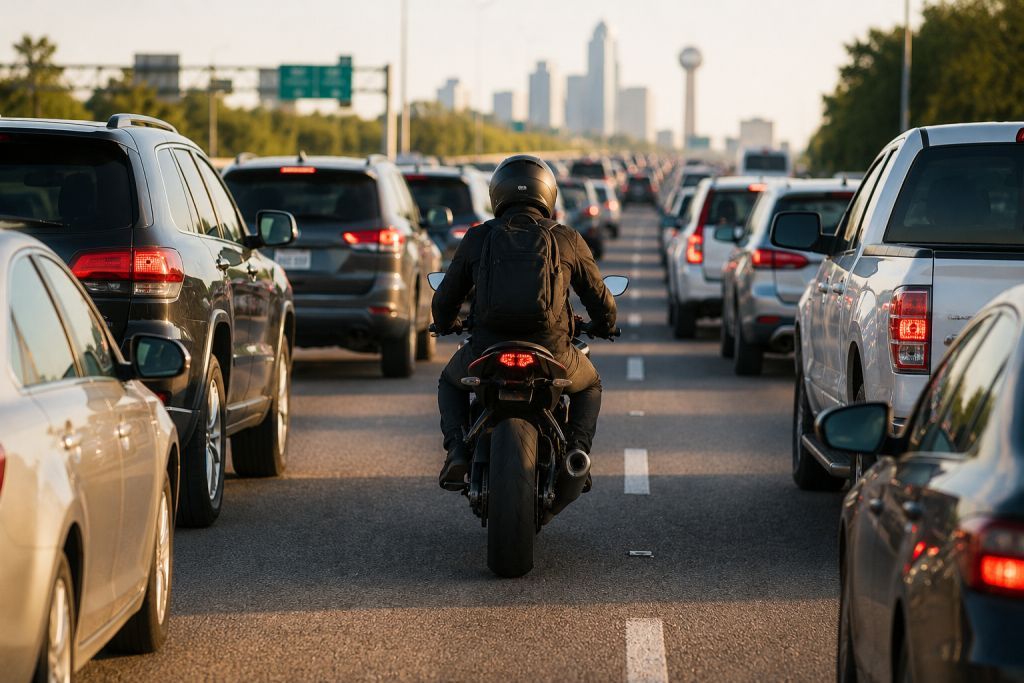
Lane splitting occurs when a motorcycle rides between two lanes of slow-moving or stopped traffic. Riders usually perform this maneuver during traffic congestion to move ahead faster than surrounding vehicles.
For example, if cars are stopped on a highway and a motorcyclist rides between them using the painted lane divider as a pathway, that action is considered lane splitting.
Lane splitting is commonly discussed alongside other motorcycle riding techniques, including:
- Lane Filtering: Moving between stopped vehicles at intersections or heavy traffic.
- Lane Sharing: Two motorcycles legally riding side-by-side in the same lane.
- Shoulder Riding: Using the highway shoulder to bypass traffic.
Although these terms are related, they are treated differently under state traffic laws.
Is Lane Splitting Legal in Texas Right Now?
No. Texas law does not currently allow lane splitting for motorcycles.
The Texas Transportation Code requires motorcycles to follow most of the same lane usage rules as passenger vehicles. Riders are expected to stay within a marked lane and cannot operate their motorcycle between lanes of traffic.
Texas motorcycle regulations specifically emphasize safe lane usage and proper traffic positioning. While the law may not explicitly use the phrase “lane splitting,” traffic enforcement officers can still issue citations for unsafe riding behaviors associated with lane splitting.
According to the Texas Constitution and Statutes, motorcycle riders must comply with roadway lane rules that prohibit dangerous or improper maneuvers.
Why Is Lane Splitting Illegal in Texas?
Texas lawmakers and traffic safety officials often cite several concerns regarding lane splitting:
- Higher accident risk in unpredictable traffic
- Limited driver awareness of motorcycles
- Potential side-swipe collisions
- Road rage incidents
- Unsafe speed differences between motorcycles and cars
- Increased confusion for drivers unfamiliar with lane splitting
Because Texas highways can become heavily congested, especially in cities like Houston, Dallas, Austin, and San Antonio, lawmakers remain cautious about introducing lane splitting legislation.
What Texas Law Says About Motorcycle Lane Usage
Texas motorcycle laws allow motorcycles full use of a lane. This means:
- A motorcycle is entitled to occupy an entire lane.
- Drivers cannot force motorcycles aside.
- Motorcyclists should remain within a single lane.
- Two motorcycles may share one lane side-by-side.
However, the law does not permit motorcycles to travel between lanes of vehicles.
The Texas Department of Transportation also promotes safe riding practices and defensive driving for motorcyclists across the state.
Can You Get Pulled Over for Lane Splitting in Texas?
Yes. Police officers may stop riders suspected of lane splitting.
Even though Texas statutes may not directly define lane splitting by name, officers can issue citations under related traffic violations such as:
- Unsafe lane changes
- Reckless driving
- Failure to maintain a single lane
- Negligent driving
- Speeding
- Improper passing
Penalties vary depending on the circumstances and severity of the incident.
Possible Penalties for Lane Splitting in Texas
Motorcyclists caught lane splitting in Texas may face:
- Traffic citations
- Fines
- Points on driving records
- Higher insurance premiums
- Liability issues after accidents
- Court appearances in serious cases
If lane splitting contributes to a crash, the rider could also face additional legal consequences.
What Happens If an Accident Occurs While Lane Splitting?
Accidents involving lane splitting can become legally complicated in Texas.
Insurance companies and courts may determine that the motorcyclist shares fault for the accident if they were operating illegally between lanes.
Texas follows a modified comparative fault rule. This means:
- Fault may be divided between parties.
- Compensation can be reduced based on fault percentage.
- A rider more than 50% responsible may lose eligibility for damages.
This is one major reason legal experts strongly advise riders to avoid lane splitting in Texas.
Difference Between Lane Splitting and Lane Filtering
Many people confuse lane splitting with lane filtering, but they are different practices.
Lane Splitting
- Occurs between moving vehicles
- Usually happens at higher speeds
- Typically performed during traffic congestion
Lane Filtering
- Occurs between stopped vehicles
- Usually performed at traffic lights
- Typically done at low speeds
Some states allow lane filtering while still prohibiting lane splitting. However, Texas currently does not officially legalize either practice.
States Where Lane Splitting Is Legal
Although Texas prohibits lane splitting, several states have legalized or partially legalized the practice.
California became the first U.S. state to officially legalize lane splitting. Other states have adopted forms of lane filtering or experimental motorcycle traffic laws.
States with some form of legal motorcycle lane maneuvering include:
- California
- Utah
- Montana
- Arizona
- Colorado (limited filtering rules)
Each state has different speed limits, traffic conditions, and rider requirements.
For updated traffic law references, riders can review information from the National Highway Traffic Safety Administration.
Has Texas Tried to Legalize Lane Splitting?
There have been discussions and proposed bills related to lane splitting and lane filtering in Texas over the years. However, none have successfully become law.
Supporters argue that lane splitting can:
- Reduce traffic congestion
- Lower rear-end collision risks
- Improve traffic flow
- Decrease motorcycle overheating during heavy traffic
Opponents argue that Texas road conditions, driver behavior, and highway speeds create safety concerns that outweigh potential benefits.
Why Some Riders Support Lane Splitting
Motorcycle advocates often support lane splitting for several reasons:
Reduced Rear-End Collisions
Motorcycles stopped in traffic are vulnerable to being hit from behind. Lane splitting may help riders avoid these situations.
Improved Traffic Flow
Some traffic studies suggest motorcycles moving ahead through congestion can reduce roadway crowding.
Engine Cooling
Certain motorcycles can overheat during long traffic delays, especially in hot climates like Texas.
Time Efficiency
Riders may reach destinations faster during peak congestion periods.
Why Many Safety Experts Oppose Lane Splitting
Despite claimed benefits, many safety organizations remain cautious.
Concerns include:
- Limited visibility for motorcycles
- Unexpected lane changes by drivers
- Distracted driving
- Aggressive traffic behavior
- Speed miscalculations
- Narrow traffic spacing
Texas highways often feature large trucks, fast-moving traffic, and wide speed variations, increasing risks for riders attempting to split lanes.
Safe Motorcycle Riding Tips in Texas
Whether riding in Houston, Dallas, Austin, El Paso, or rural Texas highways, safety should remain the top priority.
1. Stay Visible
Wear reflective gear and avoid blind spots whenever possible.
2. Follow Speed Limits
Excessive speed significantly increases accident risks.
3. Avoid Aggressive Riding
Defensive riding helps reduce collisions and road rage incidents.
4. Maintain Safe Following Distance
Allow enough space to react to sudden traffic changes.
5. Wear Proper Safety Gear
Use helmets, gloves, jackets, boots, and eye protection.
6. Monitor Road Conditions
Texas weather can change rapidly, affecting roadway safety.
Texas Helmet Laws for Motorcyclists
Texas requires riders under age 21 to wear helmets.
Riders over 21 may ride without a helmet if they:
- Complete an approved motorcycle safety course, or
- Carry qualifying medical insurance coverage.
Even when not legally required, helmets greatly reduce serious injury risks during accidents.
Can Motorcycles Share a Lane in Texas?
Yes. Texas allows two motorcycles to ride side-by-side in the same lane.
This is different from lane splitting because both motorcycles remain within one designated traffic lane rather than riding between vehicles.
How Insurance Companies View Lane Splitting
Insurance companies may view lane splitting negatively in Texas because the practice is not legal.
If a rider is involved in an accident while lane splitting:
- Claims investigations may become more difficult.
- Liability percentages may increase.
- Settlement amounts may decrease.
- Premiums may rise after claims.
Riders should carefully review policy terms and understand how traffic violations affect insurance coverage.
Will Texas Legalize Lane Splitting in the Future?
It is possible, but no statewide legalization currently exists.
As more states adopt motorcycle lane filtering laws, Texas lawmakers may revisit the issue in future legislative sessions. However, safety concerns and public opinion will likely continue influencing decisions.
Motorcycle riders should stay informed about updates from official Texas government sources and transportation agencies.
Final Answer: Is Lane Splitting Legal in Texas?
No, lane splitting is not legal in Texas at this time.
Motorcyclists are expected to remain within designated traffic lanes and follow standard roadway regulations. Riders who attempt lane splitting may receive citations and could face legal or insurance complications after accidents.
While debates continue regarding the safety and efficiency of lane splitting, Texas has not officially approved the practice. Riders should prioritize safe, defensive riding habits and remain updated on future motorcycle law changes.
Frequently Asked Questions
Is lane filtering legal in Texas?
No. Texas does not officially allow lane filtering for motorcycles.
Can motorcycles drive between cars in Texas?
Generally no. Riding between lanes of traffic is considered illegal or unsafe under Texas traffic laws.
Can two motorcycles share one lane in Texas?
Yes. Two motorcycles may legally ride side-by-side in one lane.
Can police stop motorcyclists for lane splitting?
Yes. Officers may issue citations for unsafe driving or improper lane usage.
Which state legalized lane splitting first?
California was the first U.S. state to officially legalize motorcycle lane splitting.