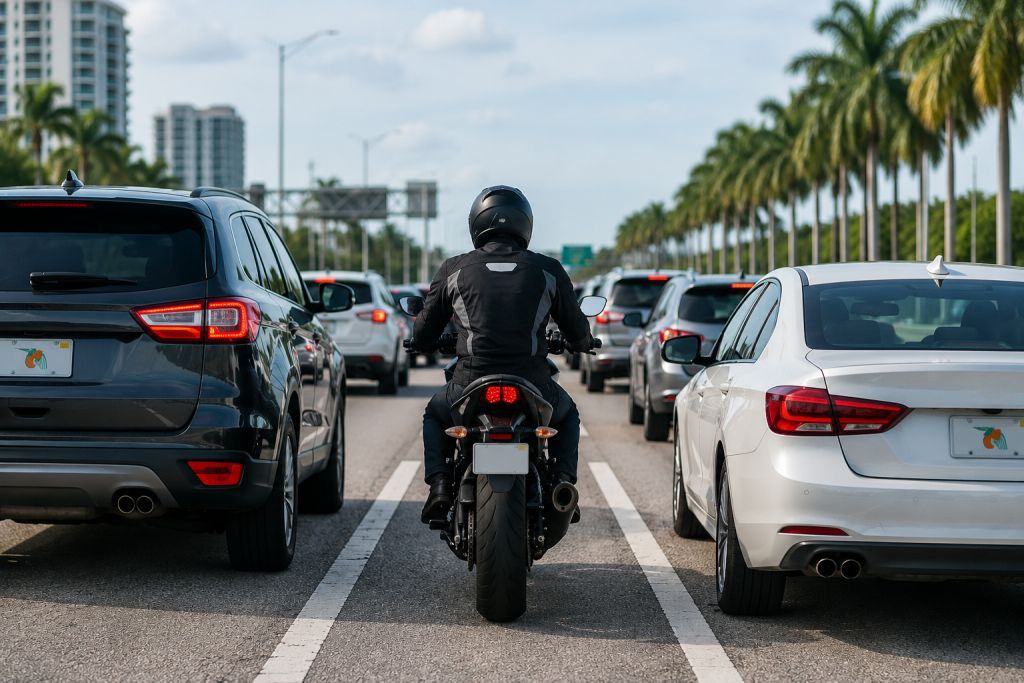
Many motorcycle riders traveling through busy Florida highways often ask one important question: Is lane splitting legal in Florida? The short answer is no. Lane splitting is currently illegal under Florida traffic law. Motorcyclists are not allowed to ride between lanes of moving or stopped traffic.
Although lane splitting is legal in some parts of the United States, Florida has strict motorcycle operation rules that prohibit this practice. Riders who violate these laws can face traffic citations, penalties, insurance complications, and potential liability in accidents.
This guide explains Florida lane splitting laws, penalties, lane filtering rules, motorcycle safety regulations, legal alternatives, and everything riders should know before operating a motorcycle on Florida roads.
What Is Lane Splitting?
Lane splitting happens when a motorcycle rides between two lanes of slow-moving or stopped vehicles. Riders commonly use this technique during heavy traffic congestion to move ahead faster than surrounding cars.
For example, if traffic is stopped on Interstate highways and a motorcycle rides between vehicles to reach the front, that action is considered lane splitting.
Motorcyclists often support lane splitting because they believe it:
- Reduces traffic congestion
- Prevents rear-end motorcycle crashes
- Improves traffic flow
- Helps avoid engine overheating
- Allows safer maneuvering in dense traffic
However, many states, including Florida, still consider the maneuver unsafe and illegal.
Is Lane Splitting Legal in Florida Right Now?
No. Lane splitting is illegal in Florida under state law.
Florida Statute 316.209 specifically states that motorcycles may not overtake and pass another vehicle in the same lane occupied by that vehicle. The law also prohibits motorcycles from operating between lanes of traffic or rows of vehicles.
According to the official Florida Legislature website, motorcycles must follow nearly all standard traffic lane rules applicable to passenger vehicles.
This means riders cannot:
- Ride between moving vehicles
- Split lanes during traffic jams
- Pass vehicles within the same lane
- Weave between stopped traffic rows
What Florida Law Says About Lane Splitting
Florida motorcycle laws are governed under Florida Statutes Chapter 316.209.
The statute clearly explains:
“No person shall operate a motorcycle between lanes of traffic or between adjacent lines or rows of vehicles.”
This wording makes Florida one of the states with a direct prohibition against lane splitting.
You can review the official statute through the Florida Senate Statutes database.
Difference Between Lane Splitting and Lane Filtering
Many people confuse lane splitting with lane filtering, but they are different riding practices.
Lane Splitting
Lane splitting occurs when motorcycles move between lanes while traffic is moving.
Lane Filtering
Lane filtering usually happens when traffic is stopped completely. A motorcycle carefully moves forward between vehicles to reach the front at traffic lights or intersections.
Some states allow lane filtering but still ban lane splitting.
Is Lane Filtering Legal in Florida?
No. Florida also prohibits lane filtering.
Because the law bans motorcycles from operating between rows of vehicles, both lane splitting and lane filtering are considered illegal.
Even if traffic is stopped at a red light, riders are not legally allowed to move between cars to reach the front.
Can Two Motorcycles Ride Side by Side in Florida?
Yes. Florida law allows two motorcycles to ride abreast within a single lane.
This means two riders may legally share one lane side by side if done safely.
However:
- More than two motorcycles cannot share one lane
- Motorcycles cannot use shared riding to block traffic
- Unsafe riding behavior can still result in citations
Why Is Lane Splitting Illegal in Florida?
Florida lawmakers and traffic safety officials believe lane splitting creates additional accident risks.
Common concerns include:
- Drivers may not expect motorcycles between lanes
- Limited visibility increases crash risks
- Sudden lane changes can cause collisions
- High-speed traffic creates severe injury potential
- Distracted drivers may fail to notice riders
Florida highways already experience heavy tourism traffic, congestion, and distracted driving incidents. Because of this, lawmakers continue to maintain restrictions against lane splitting.
States Where Lane Splitting Is Legal
While Florida bans lane splitting, some states allow it fully or partially.
California is currently the most recognized state where lane splitting is legal for motorcycles.
Other states have explored or approved limited lane filtering laws under specific conditions.
Motorcycle laws frequently change, so riders traveling across state lines should always check updated regulations through official transportation departments.
Useful reference: National Highway Traffic Safety Administration (NHTSA)
Penalties for Lane Splitting in Florida
Motorcyclists caught lane splitting in Florida may face several consequences depending on the situation.
Traffic Tickets
Law enforcement officers may issue moving violation citations for improper lane usage or reckless driving.
Fines
Traffic fines vary depending on county jurisdiction and circumstances.
Points on Driving Record
Violations may add points to a rider’s license, potentially affecting insurance rates.
Insurance Problems
If an accident occurs during illegal lane splitting, insurance companies may reduce or deny claims based on rider fault.
Liability in Accidents
Illegal riding behavior can significantly affect personal injury cases and fault determinations.
What Happens If a Lane Splitting Accident Occurs?
If a motorcycle accident happens while lane splitting in Florida, the rider may face serious legal disadvantages.
Insurance adjusters and courts could determine that the rider contributed to the accident by operating illegally.
This may affect:
- Compensation claims
- Medical expense recovery
- Property damage payments
- Personal injury settlements
- Liability percentages
Florida follows comparative negligence rules, meaning fault can be shared between parties involved in an accident.
Florida Motorcycle Safety Rules Riders Should Know
Florida motorcyclists must follow several additional regulations beyond lane splitting restrictions.
Helmet Laws
Riders under 21 years old must wear helmets. Riders over 21 may ride without helmets if they carry proper insurance coverage.
Eye Protection
Florida requires approved eye protection unless the motorcycle has a windshield.
Motorcycle Endorsement
Operators must obtain a motorcycle endorsement on their driver’s license.
Headlights
Motorcycles must use headlights during operation, even during daytime.
Is Florida Considering Legalizing Lane Splitting?
There have been discussions in several states regarding lane splitting legalization, but Florida has not officially legalized the practice.
Some motorcycle advocacy groups argue that lane splitting can reduce rear-end crashes and improve traffic flow if regulated correctly.
Others believe Florida’s traffic conditions and driver behavior make legalization too dangerous.
Future legislation could potentially revisit the issue, but currently there is no active statewide legalization.
Safety Risks of Lane Splitting
Even in states where lane splitting is legal, the practice still carries risks.
Blind Spots
Drivers often fail to check for motorcycles between lanes.
Door Openings
Unexpected vehicle door openings can cause severe accidents.
Sudden Lane Changes
Cars switching lanes without signaling create high-impact collision risks.
Road Hazards
Debris between lanes can destabilize motorcycles.
Speed Differences
Large speed differences between motorcycles and traffic increase crash severity.
Safe Alternatives to Lane Splitting in Florida
Since lane splitting is illegal, riders should focus on safer and legal traffic strategies.
Maintain Safe Following Distance
Avoid tailgating and allow enough stopping space.
Use Defensive Riding Techniques
Stay visible and anticipate sudden driver actions.
Avoid Aggressive Maneuvers
Weaving through traffic increases accident risk.
Choose Safer Routes
Alternative roads with lighter traffic may reduce congestion stress.
Motorcycle Accident Statistics in Florida
Florida consistently ranks among states with high motorcycle accident numbers due to tourism, warm weather riding conditions, and dense traffic.
According to data from the Florida Highway Safety and Motor Vehicles Department, motorcycle crashes often involve:
- Driver visibility failures
- Unsafe lane changes
- Speeding
- Distracted driving
- Alcohol impairment
Because motorcycles provide limited physical protection, riders face significantly higher injury risks than passenger vehicle occupants.
Frequently Asked Questions
Can motorcycles drive between cars in Florida?
No. Florida law prohibits motorcycles from driving between lanes or rows of traffic.
Is lane filtering legal at red lights in Florida?
No. Even when traffic is stopped, lane filtering remains illegal in Florida.
Can motorcycles share one lane in Florida?
Yes. Two motorcycles may legally ride side by side within one lane.
Can lane splitting affect insurance claims?
Yes. Since lane splitting is illegal, insurance companies may consider the rider partially or fully at fault after an accident.
What state allows lane splitting?
California is the best-known state where lane splitting is legal.
Final Verdict: Is Lane Splitting Legal in Florida?
No, lane splitting is not legal in Florida. State law clearly prohibits motorcycles from riding between lanes of traffic or rows of vehicles. This restriction applies to both moving traffic and stopped traffic situations.
Motorcyclists who violate these laws may face citations, fines, insurance complications, and increased liability after accidents.
Although some states allow lane splitting or lane filtering under controlled conditions, Florida continues to prohibit the practice due to safety concerns and accident risks.
Riders traveling in Florida should follow legal motorcycle riding practices, remain highly visible, and use defensive riding techniques to stay safe on crowded roads.