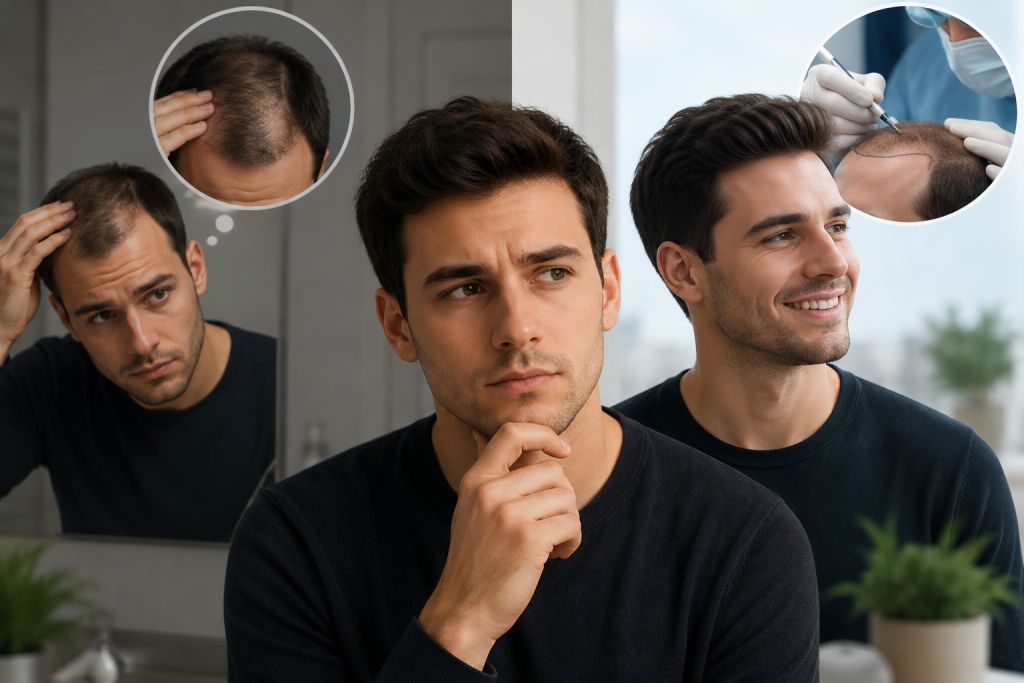
Hair loss is often associated with middle age, but millions of people begin noticing thinning hair, a receding hairline, or bald spots in their early twenties. For many young adults, experiencing hair loss at age 25 can be emotionally challenging and may affect confidence, self-image, social interactions, and even professional life.
As hair restoration technology has advanced, hair transplants have become one of the most effective solutions for restoring lost hair. Modern techniques can create natural-looking results with minimal scarring and long-lasting outcomes. However, many young adults wonder whether undergoing a hair transplant at 25 is the right decision or whether they should wait until their hair loss pattern becomes more stable.
The reality is that age alone does not determine whether a hair transplant is worthwhile. Factors such as the progression of hair loss, donor hair quality, family history, overall health, and long-term treatment goals all play important roles.
This guide explores the advantages, disadvantages, costs, success rates, expert recommendations, and alternatives to help answer one of the most frequently asked questions in hair restoration: Is a hair transplant worth it at age 25?
Quick Answer
Yes, a hair transplant can be worth it at age 25 if your hair loss pattern is relatively stable, you have sufficient donor hair, and you understand that future hair loss may continue.
Many hair restoration specialists consider age 25 an acceptable age for surgery because hair loss patterns are often becoming more predictable. However, younger patients may require a long-term treatment strategy that combines surgery with medications such as minoxidil or finasteride to preserve existing hair.
Key Facts
| Category | Key Information |
|---|---|
| Typical Candidate Age | 25–40 years old |
| Main Cause of Hair Loss | Androgenetic Alopecia (Pattern Baldness) |
| Common Procedures | FUE and FUT |
| Average Recovery Time | 7–14 days |
| Full Results Timeline | 9–18 months |
| Graft Survival Rate | Often 90%–95% |
| Permanent Results | Generally Yes |
| Insurance Coverage | Rarely covered |
Statistics and Research
Current research and industry data provide valuable insights into hair loss and transplantation outcomes:
- Approximately 25% of men with hereditary hair loss begin experiencing noticeable thinning before age 25.
- Nearly two-thirds of men experience some degree of hair loss before age 35.
- Modern FUE procedures frequently achieve graft survival rates exceeding 90%.
- Patient satisfaction rates for hair transplantation commonly exceed 85% when realistic expectations are established.
- The global hair restoration market continues to grow due to increasing awareness and technological improvements.
- Hair transplant procedures have become significantly more popular among patients under 30 compared with previous decades.
Understanding Hair Loss at Age 25
The most common cause of hair loss among young adults is androgenetic alopecia, commonly known as male pattern baldness or female pattern hair loss. This hereditary condition is influenced by genetics and hormonal sensitivity, particularly to dihydrotestosterone (DHT).
DHT gradually causes susceptible hair follicles to shrink. As the follicles miniaturize, they produce thinner and shorter hairs until hair growth eventually stops altogether.
Hair loss at age 25 can appear in several ways:
- Receding hairline
- Thinning crown
- Diffuse thinning across the scalp
- Widening part line in women
- Combination of recession and thinning
Because hair loss often continues progressing throughout the twenties and thirties, specialists must carefully assess future hair loss risk before recommending surgery.
Why Age 25 Is a Unique Time for Hair Restoration
Age 25 sits at an interesting point in hair restoration planning. Patients are generally old enough for doctors to identify emerging hair loss patterns, yet young enough that significant future hair loss may still occur.
Some patients seek treatment immediately because they want to restore confidence and maintain a youthful appearance. Others are advised to wait if their hair loss appears highly aggressive or unpredictable.
This balance between early intervention and long-term planning is one of the most important considerations when evaluating hair transplantation at age 25.
How Hair Transplants Work
A hair transplant involves relocating healthy hair follicles from a donor area—typically the back or sides of the scalp—to areas experiencing thinning or baldness.
The transplanted follicles retain their genetic resistance to DHT and continue producing hair after transplantation.
FUE (Follicular Unit Extraction)
FUE is currently one of the most popular techniques among younger patients.
| Advantages | Disadvantages |
|---|---|
| Minimal scarring | May cost more than FUT |
| Faster recovery | Longer extraction process |
| Natural-looking results | Large sessions may require multiple days |
| Suitable for shorter hairstyles | Requires skilled surgeon |
FUT (Follicular Unit Transplantation)
FUT remains an effective option in specific situations.
| Advantages | Disadvantages |
|---|---|
| Higher graft yield | Linear scar |
| Often lower cost per graft | Longer recovery period |
| Useful for extensive restoration | Less suitable for very short haircuts |
| Efficient graft harvesting | More invasive than FUE |
Benefits of Getting a Hair Transplant at Age 25
| Benefit | Impact |
|---|---|
| Improved Confidence | Can positively affect self-esteem and social interactions |
| Natural Appearance | Modern techniques create realistic hairlines |
| Long-Term Solution | Transplanted follicles are generally permanent |
| Youthful Look | May restore a fuller and younger appearance |
| Low Maintenance | Requires normal hair care after recovery |
| Career Confidence | Can improve personal and professional confidence |
Potential Risks and Limitations
While hair transplantation can deliver excellent results, it is important to understand its limitations.
| Risk | Description |
|---|---|
| Future Hair Loss | Native hair may continue thinning |
| Need for Additional Procedures | Some patients require future transplants |
| Shock Loss | Temporary shedding may occur |
| Scarring | Possible, especially with FUT |
| Cost | Can be significant |
| Unrealistic Expectations | Results vary based on donor hair quality |
Hair Transplant at 25 vs 30 vs 35
| Factor | Age 25 | Age 30 | Age 35 |
|---|---|---|---|
| Hair Loss Stability | Moderate | Better | Often Predictable |
| Future Hair Loss Risk | Higher | Moderate | Lower |
| Need for Future Procedures | More Likely | Possible | Less Common |
| Donor Hair Quality | Usually Strong | Strong | Varies |
| Long-Term Planning Importance | Very High | High | Moderate |
Hair Transplant Cost at Age 25
Cost is one of the biggest factors influencing whether a hair transplant is worth it. Since hair transplantation is considered a cosmetic procedure in most countries, health insurance providers generally do not cover the expense.
The total cost depends on several factors, including the number of grafts required, the surgeon's experience, the clinic's reputation, the procedure type (FUE or FUT), and the country where treatment is performed.
| Country | Typical Cost Range |
|---|---|
| United States | $6,000–$20,000+ |
| Canada | $5,000–$15,000+ |
| United Kingdom | £3,000–£15,000+ |
| Turkey | $2,000–$6,000 |
| India | $800–$5,000 |
| Thailand | $2,000–$7,000 |
Although medical tourism destinations often offer lower prices, choosing a clinic based solely on cost can be risky. Surgical experience, patient reviews, accreditation, and safety standards should carry greater weight than price alone.
Estimated Graft Requirements
| Hair Loss Severity | Typical Grafts Needed |
|---|---|
| Minor Hairline Recession | 1,000–1,500 |
| Moderate Hair Loss | 1,500–2,500 |
| Advanced Thinning | 2,500–4,000 |
| Extensive Baldness | 4,000+ |
Hair Transplant Recovery Timeline
Many people considering surgery at age 25 are concerned about downtime. Fortunately, modern procedures have relatively short recovery periods compared with many other cosmetic surgeries.
| Timeline | Expected Recovery Stage |
|---|---|
| Days 1–3 | Swelling, redness, and mild discomfort |
| Days 4–10 | Scabs gradually heal |
| Weeks 2–4 | Temporary shedding phase (shock loss) |
| Months 3–4 | New hair growth begins |
| Months 6–9 | Noticeable improvement in density |
| Months 12–18 | Final results become visible |
One of the most misunderstood stages is the shedding phase. Newly transplanted hairs often fall out within the first month. This is normal and does not indicate failure. The follicles remain healthy beneath the scalp and begin producing new hair several months later.
Hair Transplant vs Non-Surgical Hair Loss Treatments
Many specialists recommend considering non-surgical treatments before or alongside transplantation. These treatments may help slow progression and preserve existing hair.
| Factor | Hair Transplant | Minoxidil | Finasteride |
|---|---|---|---|
| Restores Lost Hair | Yes | Limited | Limited |
| Slows Future Hair Loss | No | Moderately | Often Effective |
| Permanent Results | Generally Yes | No | No |
| Maintenance Required | Low | Continuous | Continuous |
| Upfront Cost | High | Low | Low |
| Visible Density Improvement | High | Moderate | Moderate |
For younger patients, combining medical therapy with transplantation often provides the most sustainable long-term outcome.
Long-Term Maintenance After a Hair Transplant
One of the biggest misconceptions about hair transplantation is that surgery permanently solves all future hair loss concerns. While transplanted follicles generally continue growing, untreated native hairs may still thin over time.
Long-term maintenance can significantly improve outcomes and reduce the likelihood of needing additional procedures.
Recommended Maintenance Strategies
- Follow-up consultations with a dermatologist or hair restoration specialist.
- Use of FDA-approved medications when appropriate.
- Proper scalp care and hygiene.
- Balanced nutrition rich in protein, iron, and vitamins.
- Stress management techniques.
- Avoiding smoking and excessive alcohol consumption.
- Monitoring future hair loss progression.
Who Is an Ideal Candidate at Age 25?
Not every 25-year-old experiencing hair loss is an ideal candidate for transplantation. The best candidates typically meet several important criteria.
| Evaluation Factor | Ideal Candidate Characteristics |
|---|---|
| Hair Loss Pattern | Relatively stable |
| Donor Hair Quality | Dense and healthy |
| General Health | Good overall health |
| Expectations | Realistic and informed |
| Commitment | Willing to follow long-term treatment plans |
| Cause of Hair Loss | Pattern baldness rather than temporary shedding disorders |
Individuals with rapidly progressing hair loss may be advised to stabilize the condition before undergoing surgery.
Benefits of Getting a Hair Transplant at a Younger Age
While younger patients require careful planning, there are several advantages to addressing hair loss early.
- Restoration of confidence during key personal and professional years.
- Strong donor hair availability in many younger patients.
- Ability to maintain a youthful appearance.
- Longer period of enjoying restored hair density.
- Modern techniques offer highly natural results.
Challenges and Limitations
Understanding the limitations of hair transplantation is equally important.
- Future hair loss can alter overall appearance.
- Additional surgeries may be required.
- Results take months to fully develop.
- Costs can be substantial.
- Not everyone has sufficient donor hair.
- Success depends heavily on surgeon expertise.
Pros and Cons Table
| Pros | Cons |
|---|---|
| Permanent transplanted follicles | High upfront investment |
| Natural-looking results | Potential future procedures |
| Improved confidence | Recovery period required |
| Minimal maintenance after healing | Hair loss may continue elsewhere |
| Long-term solution | Results take time to develop |
| Modern procedures have high success rates | Requires skilled surgeon for optimal results |
Decision Guide: Is a Hair Transplant Worth It for You?
| Your Situation | Recommendation |
|---|---|
| Stable hair loss for several years | Strong candidate for consultation |
| Rapid ongoing thinning | Consider medical treatment first |
| Strong donor area | Positive indicator |
| Limited donor supply | Requires careful evaluation |
| Realistic expectations | Higher likelihood of satisfaction |
| Expecting instant results | Understand recovery timeline first |
| Seeking long-term solution | Hair transplant may be worthwhile |
When to See a Hair Restoration Specialist
Professional evaluation is essential before making a decision. Consider scheduling a consultation if:
- You notice significant hair loss before age 30.
- Your hairline continues receding rapidly.
- You have a family history of advanced baldness.
- Over-the-counter treatments are ineffective.
- You want a personalized long-term treatment plan.
- You are considering a hair transplant procedure.
Frequently Asked Questions (FAQ)
1. Is 25 too young for a hair transplant?
No. Many successful patients undergo transplantation at age 25, provided their hair loss pattern has been properly evaluated.
2. How long does a hair transplant last?
Transplanted follicles are generally permanent and can continue growing for decades.
3. Will I need another hair transplant later?
Possibly. Future hair loss in untreated areas may require additional procedures.
4. Is FUE better than FUT?
Both procedures are effective. The ideal option depends on individual goals, donor hair availability, and surgeon recommendations.
5. What is the success rate of a hair transplant?
Experienced surgeons frequently achieve graft survival rates between 90% and 95%.
6. Can women get hair transplants at age 25?
Yes. Women with appropriate hair loss patterns may benefit from transplantation.
7. How painful is the procedure?
Most patients report mild discomfort due to local anesthesia and modern surgical techniques.
8. How soon can I return to work?
Many individuals return within a few days, although visible redness may persist temporarily.
9. Can exercise affect recovery?
Strenuous exercise is typically restricted for one to two weeks following surgery.
10. Are there alternatives to surgery?
Yes. Medications, PRP therapy, laser therapy, and lifestyle improvements may help manage hair loss.
11. Does transplanted hair require special care?
After recovery, transplanted hair can generally be treated like natural hair.
12. How do I know if I am a good candidate?
A consultation with a qualified dermatologist or hair restoration surgeon is the best way to determine eligibility.
Summary
A hair transplant at age 25 can be an excellent investment for the right candidate. Modern procedures such as FUE and FUT provide natural-looking results, high satisfaction rates, and long-term hair restoration. However, younger patients must consider future hair loss progression and develop a long-term treatment strategy.
The most successful outcomes occur when surgery is combined with realistic expectations, proper planning, and ongoing hair preservation efforts. While age 25 is not necessarily too young, careful evaluation is essential before proceeding.
Conclusion
So, is a hair transplant worth it at age 25? For many individuals, the answer is yes. If hair loss is affecting confidence and quality of life, a well-planned transplant can deliver meaningful and lasting improvements.
However, the decision should never be based on age alone. Hair loss stability, donor hair quality, future baldness risk, financial considerations, and long-term maintenance all play important roles.
Before making a final decision, consult an experienced hair restoration specialist who can assess your situation, explain all available options, and develop a treatment plan tailored to your long-term goals.
Sources
- International Society of Hair Restoration Surgery (ISHRS)
- American Academy of Dermatology
- National Center for Biotechnology Information (NCBI)
- National Institutes of Health (NIH)
- MedlinePlus Hair Loss Resource
- Cleveland Clinic Hair Transplant Guide
- NHS Hair Transplant Information
- Mayo Clinic Hair Loss Overview
- Harvard Health Publishing
- WebMD Hair Loss Resource Center
- British Association of Dermatologists
- American Society for Dermatologic Surgery