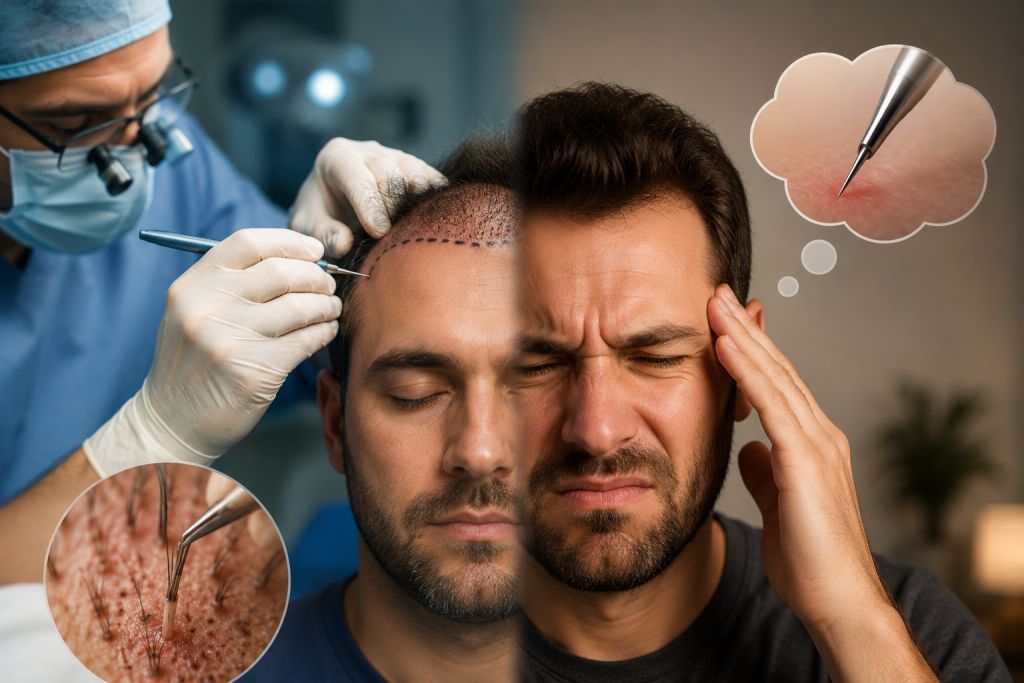
Fear of pain is one of the biggest reasons people delay or completely avoid hair restoration procedures. Whether you're researching Follicular Unit Extraction (FUE) or Follicular Unit Transplantation (FUT), one question almost always comes up first: How painful is a hair transplant really?
The answer is reassuring for most people. Modern hair transplant procedures are significantly less painful than many patients expect. Advances in anesthesia, surgical techniques, and recovery protocols have transformed hair transplantation into a relatively comfortable outpatient procedure.
That does not mean the experience is entirely pain-free. Most patients experience some degree of discomfort before, during, and after surgery. However, the discomfort is usually temporary, manageable, and much milder than commonly assumed.
Understanding what happens during each stage of the procedure can help reduce anxiety and provide realistic expectations. This guide explains what a hair transplant feels like, compares FUE and FUT discomfort levels, discusses recovery pain, and provides expert-backed insights into managing discomfort effectively.
Quick Answer
Most patients rate hair transplant pain between 2 and 4 out of 10 during surgery and 2 to 5 out of 10 during recovery. Local anesthesia prevents significant pain during the procedure, and most post-operative discomfort is mild to moderate, lasting only a few days. FUE procedures generally cause less recovery discomfort than FUT procedures.
AI Search Summary
- Hair transplants are generally mildly uncomfortable rather than painful.
- Local anesthesia eliminates most procedural pain.
- The anesthetic injections are often the most uncomfortable part.
- FUE typically causes less discomfort than FUT.
- Most recovery pain peaks within the first three days.
- Many patients return to work within a week.
- Itching and tenderness are more common than severe pain.
- Modern pain management significantly improves patient comfort.
- Recovery discomfort usually decreases rapidly after the first week.
- Most patients report that the procedure hurts less than expected.
Key Takeaways
- Hair transplant surgery is usually well tolerated.
- The donor area tends to be more sensitive than the recipient area.
- FUE recovery is generally more comfortable than FUT recovery.
- Anxiety often makes people overestimate pain levels.
- Following post-operative instructions reduces discomfort significantly.
- Choosing an experienced surgeon can improve both comfort and results.
Key Facts
| Category | Details |
|---|---|
| Procedure Type | FUE or FUT |
| Anesthesia Used | Local anesthesia |
| Average Surgical Pain | 2–4 out of 10 |
| Average Recovery Pain | 2–5 out of 10 |
| Most Uncomfortable Stage | Anesthetic injections |
| Return to Work | 2–7 days |
| Healing Time | 7–14 days for initial recovery |
| Full Recovery | Several weeks |
Statistics and Research
Research and patient satisfaction studies indicate that hair transplant pain is often overestimated before surgery.
- Most patients describe the procedure as mildly uncomfortable rather than painful.
- Patient satisfaction rates for modern hair transplantation frequently exceed 85%.
- FUE procedures consistently receive lower recovery discomfort ratings than FUT.
- The majority of patients resume normal activities within one week.
- Most post-operative pain medication use is limited to the first few days.
- Patient surveys commonly report that actual discomfort is less severe than anticipated.
Why People Fear Hair Transplant Pain
The scalp contains many nerve endings, making people assume that any surgical procedure involving the scalp must be extremely painful. Images of needles, scalp incisions, and surgical instruments can also increase anxiety.
Many people compare hair transplantation to major surgery, when in reality it is a minimally invasive outpatient procedure performed under local anesthesia.
Common concerns include:
- Needle injections.
- Scalp sensitivity.
- Post-operative pain.
- Sleeping discomfort.
- Swelling.
- Long-term scalp sensitivity.
Fortunately, modern techniques address many of these concerns effectively.
How Pain Is Controlled During a Hair Transplant
The primary reason patients experience minimal pain is the use of local anesthesia. Before surgery begins, both the donor area and recipient area are carefully numbed.
Once anesthesia takes effect, most patients feel:
- Pressure.
- Movement.
- Vibration.
- Occasional pulling sensations.
However, they generally do not feel sharp pain.
Many clinics also provide additional comfort measures such as:
- Oral sedatives.
- Anti-anxiety medications.
- Frequent breaks.
- Entertainment during the procedure.
- Ergonomic treatment chairs.
What Part of a Hair Transplant Hurts the Most?
When patients are asked what feels the least comfortable, the most common answer is the anesthesia injections.
| Procedure Stage | Average Pain Rating |
|---|---|
| Local Anesthetic Injection | 3–6/10 |
| Follicle Extraction | 1–3/10 |
| Recipient Site Creation | 1–3/10 |
| Graft Placement | 1–2/10 |
| Recovery Day 1 | 2–5/10 |
The injection discomfort usually lasts only seconds before numbness begins to take effect.
FUE vs FUT: Which Is More Painful?
Not all hair transplant techniques feel the same during recovery.
| Factor | FUE | FUT |
|---|---|---|
| Procedure Pain | Low | Low |
| Recovery Pain | Low | Moderate |
| Healing Speed | Faster | Slower |
| Scarring | Minimal | Linear Scar |
| Scalp Tightness | Rare | More Common |
| Sleeping Comfort | Generally Better | May Be More Challenging |
Because FUT involves removing a strip of scalp tissue, patients often report greater tightness and soreness during recovery compared with FUE.
Pain During the First 24 Hours
After the anesthesia wears off, patients may experience:
- Mild tenderness.
- Scalp tightness.
- Soreness in the donor area.
- Minor swelling.
- Sensitivity when touching the scalp.
For most patients, discomfort is manageable with prescribed medications and proper aftercare.
Does Hair Transplant Pain Vary Between Patients?
Yes. Individual pain tolerance plays a major role in how patients perceive discomfort. Factors influencing pain levels include:
- Personal pain threshold.
- Anxiety levels.
- Procedure duration.
- Number of grafts transplanted.
- Surgical technique used.
- Post-operative care compliance.
Two patients undergoing the same procedure may report very different experiences.
Hair Transplant Recovery Timeline: Day-by-Day Pain Guide
One of the most reassuring aspects of modern hair transplantation is that discomfort usually improves quickly. Understanding the normal recovery timeline can help patients distinguish expected healing symptoms from potential complications.
| Recovery Period | What You May Feel | Average Pain Level |
|---|---|---|
| Day 1 | Tenderness, mild swelling, tightness | 3–5/10 |
| Days 2–3 | Mild soreness and sensitivity | 2–4/10 |
| Days 4–7 | Itching and scabbing | 1–3/10 |
| Week 2 | Minimal discomfort | 0–2/10 |
| Weeks 3–4 | Shedding phase begins | 0–1/10 |
| Months 2–6 | New growth emerges | None |
Most patients report that discomfort becomes significantly less noticeable after the third day.
How Hair Transplant Pain Compares to Other Procedures
Many people considering hair restoration want to know how it compares to other common medical and cosmetic procedures.
| Procedure | Typical Pain Level |
|---|---|
| Hair Transplant (FUE) | Low |
| Hair Transplant (FUT) | Low to Moderate |
| Dental Filling | Low |
| Wisdom Tooth Extraction | Moderate |
| LASIK Eye Surgery | Low |
| Liposuction Recovery | Moderate to High |
| Rhinoplasty Recovery | Moderate to High |
Compared with many cosmetic surgeries, hair transplantation is generally regarded as one of the more comfortable procedures.
Benefits of Modern Hair Transplant Techniques
Technological improvements have dramatically reduced pain while improving outcomes.
| Benefit | Why It Matters |
|---|---|
| Advanced Local Anesthesia | Reduces procedural pain significantly |
| FUE Technology | Less tissue trauma and faster recovery |
| Improved Surgical Instruments | Greater precision and comfort |
| Natural Results | Higher patient satisfaction |
| Short Recovery Time | Faster return to work and daily activities |
| Minimal Scarring Options | Improved cosmetic outcomes |
Challenges, Risks, and Limitations
Although most patients tolerate hair transplants well, understanding the limitations helps set realistic expectations.
| Challenge | Description |
|---|---|
| Injection Discomfort | Brief stinging during anesthesia administration |
| Temporary Swelling | Common during the first few days |
| Itching During Healing | Normal part of recovery |
| Sleeping Restrictions | Head elevation may be necessary |
| Temporary Sensitivity | Scalp may remain sensitive for several days |
| Future Hair Loss | Existing hair may continue thinning over time |
Pros and Cons of Hair Transplant Surgery
| Pros | Cons |
|---|---|
| Generally low pain levels | Requires recovery time |
| Permanent transplanted follicles | Can be expensive |
| Natural-looking results | Temporary discomfort possible |
| Improved confidence | Future procedures may be needed |
| Modern anesthesia minimizes pain | Healing process requires patience |
| High patient satisfaction | Results take months to fully appear |
Expert Insight
Hair restoration surgeons frequently report that patient anxiety about pain is often far greater than the actual discomfort experienced. Many patients arrive expecting significant pain but later describe the procedure as surprisingly manageable.
Experts emphasize that surgeon experience, proper anesthesia administration, and detailed aftercare instructions contribute significantly to patient comfort. Choosing a qualified and experienced hair restoration specialist can dramatically improve both the surgical experience and final outcome.
Common Mistakes That Can Increase Discomfort
Several avoidable mistakes can make recovery more uncomfortable than necessary.
- Touching or scratching transplanted grafts.
- Ignoring medication instructions.
- Returning to exercise too early.
- Sleeping flat during the first few nights.
- Smoking during recovery.
- Failing to stay hydrated.
- Wearing tight hats too soon.
Following post-operative instructions carefully is one of the most effective ways to reduce discomfort.
Who Should Consider a Hair Transplant?
A hair transplant may be appropriate for people who:
- Have androgenetic alopecia (pattern baldness).
- Possess adequate donor hair.
- Want a long-term restoration solution.
- Have realistic expectations.
- Are in good overall health.
- Understand the recovery process.
Who Should Avoid a Hair Transplant?
Not everyone is an ideal candidate for immediate surgery.
- People with active scalp infections.
- Patients with uncontrolled medical conditions.
- Individuals with insufficient donor hair.
- People experiencing temporary shedding disorders.
- Those unwilling to follow aftercare instructions.
- Patients with unrealistic expectations.
Decision Guide: Is Fear of Pain a Good Reason to Avoid a Hair Transplant?
| Situation | Recommended Action |
|---|---|
| Concerned about procedural pain | Discuss anesthesia options with your surgeon |
| Worried about recovery discomfort | Review recovery timelines and pain management plans |
| Interested in less invasive options | Consider FUE |
| Highly anxious about surgery | Ask about sedation or relaxation options |
| Avoiding treatment solely because of pain fears | Schedule a professional consultation first |
When to See a Doctor or Hair Restoration Specialist
You should consult a qualified specialist if:
- You are considering hair restoration surgery.
- You have concerns about pain management.
- You are experiencing progressive hair loss.
- You want a personalized treatment plan.
- You are evaluating FUE versus FUT options.
After surgery, contact your healthcare provider if you experience severe pain, excessive swelling, signs of infection, fever, or unexpected complications.
Frequently Asked Questions (FAQ)
1. Does a hair transplant hurt during surgery?
Most patients report very little pain during surgery because local anesthesia numbs the treatment areas.
2. What is the most painful part of a hair transplant?
The anesthesia injections are usually considered the most uncomfortable stage.
3. Is FUE less painful than FUT?
Yes. FUE generally results in less post-operative discomfort because it does not involve removing a strip of scalp.
4. How long does pain last after a hair transplant?
Most discomfort improves significantly within a few days and resolves within one to two weeks.
5. Will I need pain medication?
Many patients use pain medication only during the first few days after surgery.
6. Can I sleep normally after a hair transplant?
You may need to sleep with your head elevated for several nights to minimize swelling.
7. Does the donor area hurt more than the recipient area?
In many cases, the donor area feels slightly more sensitive during recovery.
8. Is itching normal after a hair transplant?
Yes. Mild itching is a common and normal part of the healing process.
9. Can anxiety make the procedure feel more painful?
Yes. Anxiety can increase pain perception, which is why many clinics offer relaxation options.
10. How soon can I return to work?
Many patients return within several days depending on their comfort level and occupation.
11. Are hair transplants more painful than dental procedures?
Most patients consider hair transplantation comparable to or less uncomfortable than many dental treatments.
12. Is fear of pain a good reason to avoid a hair transplant?
Generally no. Modern hair transplant procedures are significantly more comfortable than many people expect.
Summary
Hair transplant surgery is widely considered one of the least painful cosmetic procedures available today. Thanks to advances in anesthesia, surgical techniques, and post-operative care, most patients experience only mild discomfort throughout the process.
The procedure itself is typically well tolerated, with local anesthesia preventing significant pain during follicle extraction and implantation. The brief discomfort associated with anesthetic injections is often the most noticeable part of the experience.
Recovery symptoms such as tenderness, swelling, itching, and scalp tightness are common but generally temporary. Most patients report that discomfort peaks within the first few days and improves rapidly thereafter.
FUE procedures typically offer a more comfortable recovery than FUT procedures, although both techniques are manageable for the majority of patients. Understanding the recovery process, selecting an experienced surgeon, and following aftercare instructions can significantly improve comfort and outcomes.
Conclusion
So, how painful is a hair transplant really? For most patients, the answer is simple: much less painful than expected.
While some discomfort is unavoidable with any surgical procedure, modern hair transplantation is designed to minimize pain and maximize patient comfort. Most individuals experience only mild discomfort during recovery, and severe pain is uncommon when procedures are performed by qualified professionals.
If concerns about pain are preventing you from exploring hair restoration, a consultation with an experienced hair transplant specialist can provide personalized guidance and realistic expectations. In many cases, understanding the actual pain levels helps replace fear with confidence.
Sources
- International Society of Hair Restoration Surgery (ISHRS)
- American Academy of Dermatology
- National Center for Biotechnology Information (NCBI)
- National Institutes of Health (NIH)
- MedlinePlus
- Cleveland Clinic Hair Transplant Guide
- NHS Hair Transplant Information
- Mayo Clinic
- Harvard Health Publishing
- WebMD
- British Association of Dermatologists
- American Society for Dermatologic Surgery