Hair transplantation has become one of the most effective long-term solutions for hair loss. Whether performed using Follicular Unit Extraction (FUE) or Follicular Unit Transplantation (FUT), the success of the procedure depends not only on the transplanted grafts but also on how well the donor area heals.
The donor area is the region of the scalp where healthy hair follicles are harvested before being transplanted into thinning or balding areas. Because this area undergoes hundreds or even thousands of follicle extractions, patients often want to know how long recovery will take and what they can expect during the healing process.
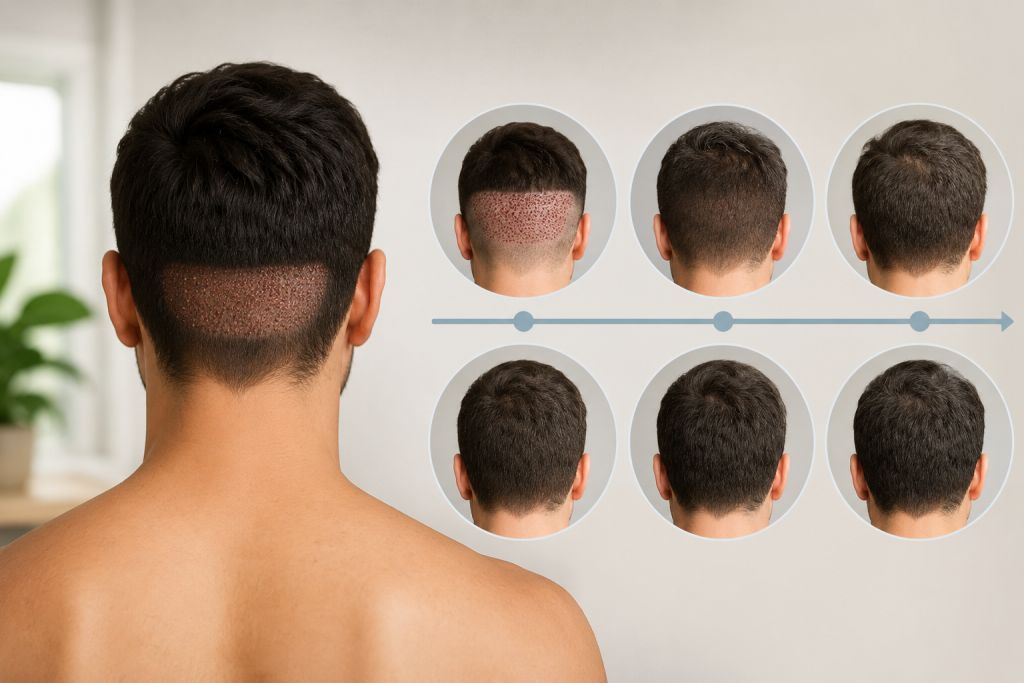
Although every patient heals differently, most individuals experience substantial donor area recovery within one to two weeks. However, complete cosmetic healing and scalp normalization may continue for several months after the procedure.
Quick Answer
Most patients experience significant donor area healing within 7–14 days after a hair transplant. Scabs generally disappear within 7–10 days, redness improves over the following weeks, and cosmetic recovery is often achieved within 1–3 months. Full donor area maturation can take 6–12 months depending on the procedure and individual healing factors.
Key Facts
| Recovery Milestone | Typical Timeline |
|---|---|
| Initial Healing | 7–14 Days |
| Scab Resolution | 7–10 Days |
| Return to Office Work | 3–7 Days |
| Exercise Restriction | 10–14 Days |
| Cosmetic Recovery | 1–3 Months |
| Complete Maturation | 6–12 Months |
Statistics and Research
| Recovery Metric | Average Finding |
|---|---|
| Visible FUE Healing | Approximately 10 Days |
| Scab Shedding | 7–14 Days |
| Return to Normal Daily Activities | Within 1 Week |
| Redness Duration | 2–8 Weeks |
| Complete Cosmetic Healing | 1–3 Months |
Main Content
What Is the Donor Area?
The donor area is the section of the scalp that provides healthy hair follicles for transplantation. In most cases, this area is located on the back and sides of the head because these follicles are genetically resistant to the effects of androgenetic alopecia, commonly known as male or female pattern baldness.
Hair follicles harvested from the donor area retain their resistance to hair loss when transplanted, making them ideal for restoring density in thinning regions.
Why Donor Area Recovery Matters
Many patients focus primarily on the recipient area where new hair growth will occur. However, donor area healing is equally important for several reasons.
- Maintains a natural appearance after surgery.
- Reduces the risk of visible scarring.
- Supports long-term scalp health.
- Improves patient comfort during recovery.
- Minimizes complications such as infection and folliculitis.
- Preserves donor hair for future procedures if necessary.
Donor Area Recovery Timeline
Days 1–3: Immediate Recovery
During the first few days after surgery, patients may experience mild tenderness, redness, swelling, and tightness in the donor region. Tiny extraction sites begin healing immediately as the body initiates the natural wound-repair process.
Sleeping with the head elevated and following post-operative instructions can help reduce swelling and improve comfort.
Days 4–7: Early Healing Phase
Scabs begin drying and naturally falling away from the donor area. Most patients notice a significant reduction in discomfort and can comfortably return to office-based work.
At this stage, proper scalp hygiene becomes increasingly important to support healthy healing.
Weeks 2–4: Visible Recovery
By the second week, most extraction sites have healed. Redness continues to fade, and the donor area begins to look increasingly normal.
Some patients may still experience mild numbness or sensitivity, but these symptoms usually improve over time.
Months 1–3: Cosmetic Recovery
The donor area blends naturally with surrounding hair growth. Residual redness, numbness, and sensitivity continue improving. Most patients no longer notice visible evidence of surgery.
FUE vs FUT Donor Area Recovery
| Feature | FUE | FUT |
|---|---|---|
| Incision Required | No | Yes |
| Scarring | Tiny Dot Scars | Linear Scar |
| Initial Recovery | 7–14 Days | 10–21 Days |
| Sutures | Not Required | Usually Required |
| Downtime | Shorter | Longer |
Factors That Affect Recovery Time
- Age and overall health
- Smoking habits
- Number of grafts harvested
- Scalp sensitivity
- Quality of aftercare
- Medical conditions such as diabetes
- Surgeon experience and technique
Signs of Healthy Donor Area Healing
Understanding the signs of normal recovery can help patients feel more confident throughout the healing process. While minor discomfort is expected, healthy donor area recovery follows a predictable pattern.
- Gradual reduction in redness and swelling.
- Natural shedding of scabs within 7–10 days.
- Minimal discomfort after the first week.
- No unusual discharge or persistent bleeding.
- Improvement in scalp sensation over time.
- Normal hair growth surrounding extraction sites.
- Progressive cosmetic improvement each week.
Benefits of Proper Donor Area Recovery
Following recommended aftercare instructions can significantly improve healing outcomes and overall satisfaction with the hair transplant procedure.
| Benefit | Description |
|---|---|
| Reduced Infection Risk | Proper care minimizes the chance of bacterial contamination. |
| Improved Cosmetic Appearance | Redness and visible extraction marks fade more effectively. |
| Better Comfort | Reduced itching, tenderness, and irritation. |
| Healthier Scalp | Supports normal skin regeneration and healing. |
| Preserved Donor Density | Maintains a natural appearance in the donor region. |
| Long-Term Satisfaction | Contributes to a successful overall hair restoration result. |
Challenges, Risks, and Limitations
Although donor area recovery is generally straightforward, some patients may encounter temporary side effects or uncommon complications.
| Potential Issue | Description |
|---|---|
| Redness | May persist for several weeks in some individuals. |
| Numbness | Temporary nerve sensitivity changes can occur. |
| Swelling | Usually resolves within a few days. |
| Folliculitis | Inflammation around hair follicles may develop. |
| Visible Scarring | More common with FUT procedures. |
| Shock Loss | Temporary shedding of nearby hairs can occur. |
| Delayed Healing | May occur in smokers or patients with chronic health conditions. |
How to Speed Up Donor Area Recovery
While healing cannot be rushed, certain practices can support a smoother and more comfortable recovery.
- Follow all post-operative instructions from your surgeon.
- Avoid scratching or picking at scabs.
- Use only recommended shampoos and scalp products.
- Stay hydrated and maintain a nutritious diet.
- Avoid smoking and excessive alcohol consumption.
- Protect the scalp from direct sunlight.
- Avoid strenuous exercise for the recommended period.
- Sleep with your head elevated if advised.
- Attend all follow-up appointments.
Pros and Cons of Donor Area Recovery After Hair Transplant Surgery
| Pros | Cons |
|---|---|
| Most healing occurs within two weeks. | Temporary redness and scabbing are common. |
| Modern FUE techniques leave minimal visible scarring. | Complete cosmetic healing may take months. |
| Discomfort is generally mild and manageable. | Some patients experience temporary numbness. |
| Most individuals return to work quickly. | Exercise restrictions are necessary. |
| Long-term donor area appearance is usually excellent. | Healing speed varies between individuals. |
Decision Guide: What Recovery Timeline Should You Expect?
| Situation | Expected Recovery |
|---|---|
| Small FUE Procedure | 7–10 Days |
| Large FUE Session | 10–14 Days |
| FUT Procedure | 10–21 Days |
| Healthy Non-Smoker | Faster Recovery |
| Smoker | Potentially Slower Recovery |
| Patient with Diabetes | May Require Additional Healing Time |
When to See a Doctor
While mild redness, swelling, and tenderness are normal, patients should contact their surgeon or healthcare provider if they experience any of the following:
- Increasing pain after the first few days.
- Persistent bleeding.
- Pus or unusual discharge.
- Worsening redness or swelling.
- Fever or signs of infection.
- Delayed healing beyond expected timelines.
- Severe itching or allergic reactions.
Frequently Asked Questions (FAQ)
1. How long does donor area recovery usually take?
Most patients experience significant donor area healing within 7–14 days, while complete cosmetic recovery may take several months.
2. When do donor area scabs fall off?
Scabs typically begin shedding naturally within 7–10 days after the procedure.
3. Is redness normal after a hair transplant?
Yes. Mild redness is a normal part of healing and generally improves within a few weeks.
4. Does FUE heal faster than FUT?
In most cases, yes. FUE usually involves a shorter recovery period because it does not require a linear incision.
5. Can the donor area become infected?
Although uncommon, infections can occur if proper aftercare instructions are not followed.
6. Will donor area scars be visible?
FUE typically leaves tiny dot scars that are difficult to notice, while FUT may leave a linear scar.
7. When can I exercise after a hair transplant?
Most surgeons recommend avoiding strenuous exercise for approximately 10–14 days.
8. Can hair grow back in the donor area?
The extracted follicles do not regrow, but surrounding hair continues growing and usually conceals extraction sites effectively.
Summary
Donor area recovery is a critical component of successful hair transplantation. Most patients experience noticeable healing within one to two weeks, including the resolution of scabs, reduced redness, and improved comfort. However, complete cosmetic recovery often requires several months as the scalp continues to heal and blend naturally with surrounding hair.
Recovery timelines vary depending on the procedure performed, the number of grafts harvested, individual health factors, and adherence to aftercare instructions. Understanding the expected healing process can help patients set realistic expectations and identify any signs that may require medical attention.
Conclusion
So, how long does donor area recovery take? For most individuals, the donor area heals substantially within 7–14 days, with cosmetic improvements continuing over the following weeks and months. Modern hair transplant techniques, especially FUE, have significantly improved recovery times and reduced visible scarring.
By following your surgeon’s recommendations, maintaining good scalp hygiene, and protecting the donor area during recovery, you can support optimal healing and maximize the long-term success of your hair transplant procedure.