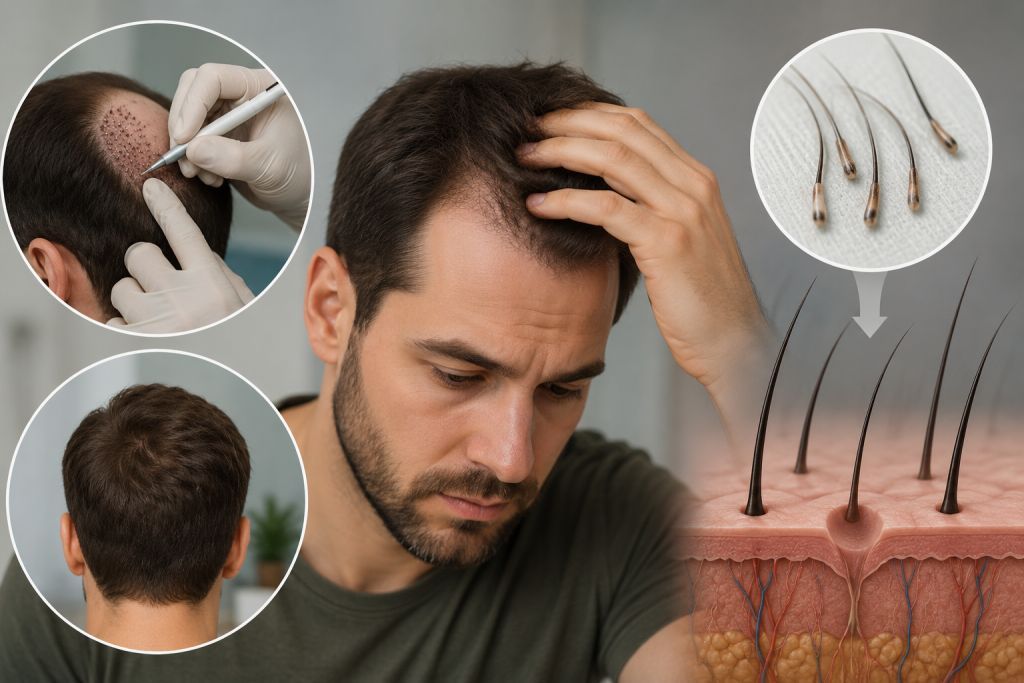
One of the most common concerns among hair transplant patients is whether transplanted hair can fall out permanently. Seeing newly transplanted hairs shed during the weeks following surgery often causes anxiety, especially for individuals who have invested significant time, money, and hope into restoring their hairline.
The good news is that temporary shedding after a hair transplant is normal and expected. In most cases, the transplanted follicles remain healthy beneath the scalp and begin producing new hair several months later. However, there are situations where transplanted hair may fail to grow or be lost permanently due to factors such as graft damage, poor surgical technique, infection, or underlying medical conditions.
Understanding the difference between normal post-transplant shedding and permanent graft loss can help patients set realistic expectations and recognize when medical evaluation may be necessary.
Quick Answer
Yes, transplanted hair can fall out permanently in certain circumstances, but most post-transplant hair shedding is temporary. After a hair transplant, it is normal for transplanted hairs to shed within the first few weeks. The follicles usually remain alive beneath the scalp and begin producing new hair within three to four months. Permanent loss typically occurs only when grafts fail to survive due to trauma, infection, poor surgical technique, inadequate blood supply, or other complications.
Key Facts
| Fact | Details |
|---|---|
| Normal Shedding Period | 2–8 Weeks After Surgery |
| New Growth Begins | 3–4 Months |
| Visible Improvement | 6–9 Months |
| Final Results | 12–18 Months |
| Average Graft Survival Rate | 90–95%+ |
| Permanent Loss Risk | Relatively Low with Proper Technique |
Statistics and Research
| Metric | Typical Finding |
|---|---|
| Graft Survival Rate | 90–95% or Higher |
| Shock Loss Frequency | Common but Usually Temporary |
| Initial Shedding Period | 2–8 Weeks |
| First Visible Growth | 3–4 Months |
| Final Density Development | 12–18 Months |
Main Content
Understanding Hair Transplant Shedding
After a hair transplant procedure, many patients are surprised to see transplanted hairs begin falling out within a few weeks. This process is commonly called shock shedding or post-transplant shedding.
Although the visible hair shaft falls out, the transplanted follicle usually remains healthy beneath the skin. The follicle enters a temporary resting phase before producing a new hair shaft several months later.
For this reason, early shedding should not automatically be interpreted as transplant failure.
Why Transplanted Hair Falls Out After Surgery
Hair follicles experience temporary stress during transplantation. Moving follicles from one area of the scalp to another interrupts their normal growth cycle.
As a result, many transplanted hairs enter the telogen (resting) phase and shed before restarting growth. This response is considered a normal biological process rather than a complication.
When Shedding Is Normal
- Hair falls out within the first 2–8 weeks.
- The scalp appears healthy.
- No signs of infection are present.
- Transplanted grafts remain securely rooted.
- New growth begins several months later.
Can Transplanted Hair Be Lost Permanently?
Although uncommon, permanent loss can occur when transplanted follicles fail to survive. This differs from temporary shedding because the follicle itself becomes damaged or dies.
Permanent graft loss is generally associated with complications rather than normal recovery.
Common Causes of Permanent Graft Loss
1. Poor Surgical Technique
Improper handling of grafts during extraction, storage, or implantation can reduce follicle survival rates.
2. Inadequate Blood Supply
Hair follicles require adequate oxygen and nutrients to survive after transplantation. Compromised blood flow may affect graft viability.
3. Infection
Untreated infections can damage transplanted follicles and interfere with healing.
4. Excessive Trauma
Scratching, rubbing, or injuring the transplanted area shortly after surgery can disrupt grafts.
5. Smoking
Smoking may reduce circulation and negatively affect healing and graft survival.
6. Underlying Medical Conditions
Certain autoimmune disorders, scalp diseases, and health conditions may impact long-term hair growth outcomes.
Temporary Shedding vs Permanent Hair Loss
Understanding the difference between normal shedding and permanent graft loss is essential for evaluating hair transplant results.
| Factor | Temporary Shedding | Permanent Graft Loss |
|---|---|---|
| Timing | 2–8 Weeks After Surgery | Can Occur at Any Stage |
| Cause | Normal Hair Cycle Reset | Follicle Damage or Failure |
| Follicle Status | Alive and Healthy | Damaged or Non-Viable |
| New Hair Growth | Usually Begins in 3–4 Months | May Never Occur |
| Treatment Needed | Generally No | May Require Medical Evaluation |
Hair Transplant Growth Timeline
Knowing what to expect after a hair transplant can help reduce unnecessary concern about shedding.
| Time After Surgery | Expected Changes |
|---|---|
| Week 1 | Scabs form and healing begins. |
| Weeks 2–8 | Transplanted hairs commonly shed. |
| Months 3–4 | New hair growth begins. |
| Months 6–9 | Noticeable improvement in density. |
| Months 12–18 | Final results become visible. |
Benefits of Modern Hair Transplant Procedures
Advancements in hair restoration technology have significantly improved graft survival and long-term outcomes.
| Benefit | Description |
|---|---|
| High Graft Survival | Many clinics report survival rates above 90%. |
| Natural Appearance | Modern techniques create realistic hairlines and density. |
| Permanent Hair Source | Donor hair is generally resistant to pattern baldness. |
| Improved Confidence | Restored hair can positively affect self-esteem. |
| Long-Term Results | Successful grafts often continue growing for decades. |
| Minimally Invasive Options | FUE offers reduced scarring and faster recovery. |
Challenges, Risks, and Limitations
Although hair transplantation is highly effective, patients should understand its limitations and potential risks.
| Challenge | Description |
|---|---|
| Shock Loss | Temporary shedding is common after surgery. |
| Variable Growth Rates | Results develop gradually over many months. |
| Limited Donor Hair | The donor supply is finite. |
| Possible Graft Failure | A small percentage of grafts may not survive. |
| Scarring | More likely with FUT procedures. |
| Need for Future Treatments | Some patients require additional procedures. |
Pros and Cons of Hair Transplantation
| Pros | Cons |
|---|---|
| Permanent solution for many patients. | Initial shedding can be alarming. |
| Natural-looking results. | Results require patience. |
| High success rates. | Some grafts may not survive. |
| Improved appearance and confidence. | Cost can be significant. |
| Long-term hair growth potential. | Recovery period is required. |
Decision Guide: Should You Be Concerned About Hair Shedding?
| Situation | Level of Concern |
|---|---|
| Hair sheds within first 2–8 weeks. | Usually Normal |
| Scalp appears healthy. | Low Concern |
| No growth after 12 months. | Consult Surgeon |
| Persistent infection symptoms. | Medical Evaluation Recommended |
| Severe scarring develops. | Consult Specialist |
| Unexpected patchy hair loss. | Professional Assessment Needed |
How to Improve Long-Term Hair Transplant Success
- Choose an experienced and qualified surgeon.
- Follow all post-operative instructions carefully.
- Avoid smoking during recovery.
- Protect the scalp from trauma and sun exposure.
- Attend scheduled follow-up appointments.
- Discuss medications such as finasteride or minoxidil with your doctor if appropriate.
- Maintain good overall health and nutrition.
When to See a Doctor
Patients should contact their surgeon or healthcare provider if they experience:
- Signs of infection, including pus or fever.
- Persistent redness that worsens over time.
- Severe pain or swelling.
- Large areas of graft loss.
- No visible growth after 12–18 months.
- Unexpected scalp conditions or severe scarring.
Frequently Asked Questions (FAQ)
1. Is it normal for transplanted hair to fall out after surgery?
Yes. Most transplanted hairs shed within the first few weeks as part of the normal healing process.
2. Does shedding mean the transplant failed?
No. In most cases, only the hair shaft sheds while the follicle remains healthy beneath the scalp.
3. When does transplanted hair start growing again?
New growth typically begins around three to four months after surgery.
4. Can transplanted hair fall out years later?
Healthy transplanted follicles are generally resistant to pattern baldness and often continue growing long term.
5. What causes permanent graft loss?
Common causes include poor surgical technique, infection, inadequate blood supply, trauma, and certain medical conditions.
6. What is shock loss?
Shock loss refers to temporary hair shedding that occurs after transplantation due to surgical stress.
7. How successful are modern hair transplants?
Many experienced clinics report graft survival rates exceeding 90–95%.
8. How long does it take to see final results?
Most patients achieve their final results between 12 and 18 months after surgery.
Summary
Transplanted hair can fall out permanently in rare cases, but most post-transplant shedding is completely normal and temporary. During the first few weeks after surgery, transplanted hairs commonly shed as part of the natural growth cycle. The follicles usually remain healthy beneath the scalp and begin producing new hair several months later.
Permanent graft loss is uncommon and is typically associated with complications such as infection, graft trauma, inadequate blood supply, poor surgical technique, or certain medical conditions. Choosing an experienced surgeon and following post-operative instructions carefully can significantly improve graft survival and long-term outcomes.
Conclusion
So, can transplanted hair fall out permanently? The answer is yes, but permanent loss is relatively uncommon when procedures are performed correctly and proper aftercare is followed. Temporary shedding during the first few weeks is a normal part of recovery and should not be mistaken for transplant failure.
Patients who understand the hair growth timeline, recognize the difference between normal shedding and graft loss, and maintain realistic expectations are more likely to feel confident throughout the recovery process and achieve satisfactory long-term results.