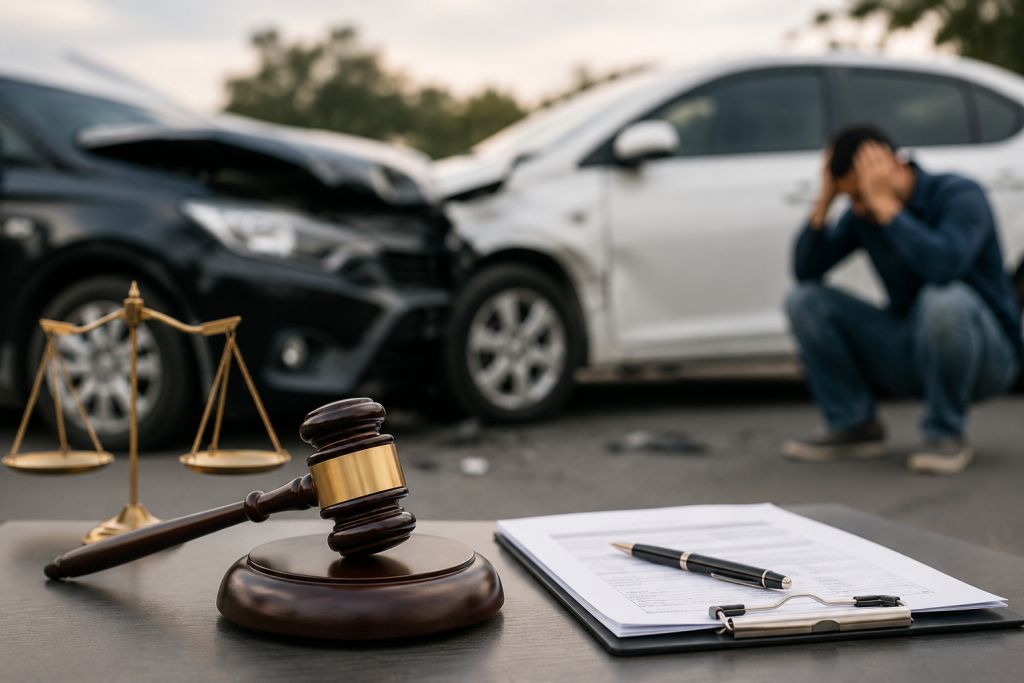
A car accident can create significant physical, emotional, and financial challenges. Medical treatment, vehicle repairs, lost income, insurance claims, and ongoing recovery often become immediate priorities. During this process, many people wonder whether filing a lawsuit is necessary or whether an insurance settlement alone will resolve the situation.
The answer depends on many factors, including how the accident occurred, the severity of the injuries, the amount of financial loss, the available insurance coverage, and the laws that apply where the accident happened. While many claims are successfully resolved through insurance negotiations, others require legal action because liability is disputed, compensation is insufficient, or multiple parties share responsibility.
A lawsuit allows an injured person to ask a court to determine liability and award compensation when negotiations do not produce an acceptable resolution. However, filing a lawsuit is not required after every accident, and it is often considered only after other options have been explored.
Understanding when a lawsuit may be appropriate helps accident victims make informed decisions while protecting their legal rights.
Quick Answer: Can I Sue After a Car Accident?
Yes. Depending on the applicable law and the facts of the accident, you may be able to file a lawsuit if another party's negligence caused your injuries or financial losses. Lawsuits are commonly considered when insurance settlements are unavailable, disputed, or insufficient to fully compensate the injured person. The availability of legal claims varies according to the jurisdiction and the specific circumstances of each accident.
When Can You Sue After a Car Accident?
Not every collision automatically results in a lawsuit.
Legal action is generally considered when an injured person believes another party is legally responsible and has suffered measurable damages.
Examples include:
- Serious physical injuries
- Permanent disabilities
- Large medical expenses
- Lost wages
- Significant property damage
- Disputed liability
- Insurance claim denial
- Insufficient settlement offers
Each situation should be evaluated according to its own facts and the applicable law.
Common Reasons People File Car Accident Lawsuits
Car accident lawsuits arise for many different reasons.
Some of the most common include:
- Negligent driving
- Distracted driving
- Speeding
- Driving under the influence
- Failure to obey traffic signals
- Unsafe lane changes
- Commercial vehicle accidents
- Defective vehicle components
In each case, liability must generally be supported by sufficient evidence.
Negligence in a Car Accident Case
Most car accident lawsuits are based on negligence.
Negligence generally involves failing to exercise reasonable care under the circumstances.
Examples may include:
- Ignoring traffic laws
- Following another vehicle too closely
- Texting while driving
- Running a red light
- Driving while fatigued
- Failing to maintain proper vehicle control
To succeed in many negligence claims, the injured person must generally establish that the other party's conduct caused compensable damages.
Types of Damages You May Be Able to Recover
Depending on the applicable law, compensation may include several categories of damages.
Examples include:
- Medical expenses
- Future medical treatment
- Lost wages
- Loss of future earning capacity
- Vehicle repair or replacement costs
- Property damage
- Pain and suffering
- Emotional distress
The specific damages available vary depending on the facts of the case and the governing legal rules.
Insurance Claim vs. Filing a Lawsuit
Most car accident claims begin with an insurance claim rather than a lawsuit.
Insurance companies investigate the accident, evaluate damages, and attempt to negotiate a settlement.
A lawsuit may become appropriate if:
- Liability is disputed.
- The insurance company denies the claim.
- The settlement offer is inadequate.
- Damages exceed available insurance coverage.
- Multiple responsible parties are involved.
Many lawsuits are ultimately resolved through settlement before reaching trial.
Who Can Be Sued After a Car Accident?
Depending on how the accident occurred, one or more parties may potentially bear legal responsibility.
Possible defendants include:
- Another driver
- A vehicle owner
- An employer responsible for a commercial driver
- A trucking company
- A vehicle manufacturer
- A parts manufacturer
- A government entity responsible for road maintenance where permitted by law
The responsible parties depend on the facts established during the investigation.
Time Limits for Filing a Lawsuit
Car accident lawsuits are generally subject to statutes of limitations.
These laws establish deadlines for filing legal claims.
The applicable deadline depends on factors such as:
- The jurisdiction
- The type of claim
- The parties involved
- Applicable statutory exceptions
Because filing deadlines vary, determining the correct limitation period is an important early step after an accident.
Evidence Needed to Support a Car Accident Lawsuit
Strong evidence plays an essential role in proving liability and damages.
Common evidence includes:
- Police reports
- Medical records
- Hospital bills
- Photographs
- Dashcam videos
- Traffic camera footage
- Witness statements
- Repair estimates
- Employment records
- Expert opinions
The quality of the evidence often influences both insurance negotiations and court proceedings.
Shared Fault Does Not Always Prevent Recovery
In some accidents, more than one person contributes to the collision.
Many jurisdictions apply comparative negligence rules that may reduce compensation according to the injured person's percentage of fault.
Other jurisdictions follow different negligence systems, such as modified comparative negligence or contributory negligence. The applicable legal standard depends on where the accident occurred.
Why Acting Quickly Can Help
Although lawsuits are often filed months after an accident, beginning the investigation early offers several advantages.
- Evidence is easier to preserve.
- Witness memories remain fresher.
- Medical documentation is easier to organize.
- Vehicle damage can be properly documented.
- Insurance negotiations can begin while evidence is readily available.
Taking prompt action helps protect legal rights and improves the ability to present a well-supported claim if litigation later becomes necessary.
When You May Be Able to File a Car Accident Lawsuit
| Situation | Lawsuit May Be Appropriate |
|---|---|
| Serious Personal Injuries | Yes |
| Permanent Disability | Yes |
| Large Medical Expenses | Yes |
| Insurance Claim Denied | Yes |
| Settlement Offer Too Low | Yes |
| Disputed Liability | Yes |
| Multiple Responsible Parties | Yes |
| Minor Property Damage Only | Possibly Not |
| No Injuries and Full Insurance Payment | Usually Not Necessary |
| Wrongful Death | Yes |
Insurance Claim vs. Car Accident Lawsuit
| Feature | Insurance Claim | Lawsuit |
|---|---|---|
| Purpose | Request payment under an insurance policy | Seek compensation through the court system |
| Decision Maker | Insurance company | Judge or jury if the case proceeds to trial |
| Time Required | Often shorter | May take considerably longer |
| Negotiation | Common | Settlement discussions often continue during litigation |
| Court Involvement | Usually none | Possible |
| Legal Representation | Optional | Often beneficial in complex cases |
Types of Damages That May Be Recoverable
| Damage Type | Examples |
|---|---|
| Medical Expenses | Hospital bills, surgery, rehabilitation |
| Lost Income | Missed work, reduced earning capacity |
| Property Damage | Vehicle repairs or replacement |
| Pain and Suffering | Physical pain, emotional distress |
| Future Medical Care | Long-term treatment and rehabilitation |
| Other Financial Losses | Transportation costs, medical equipment, related expenses |
Benefits of Filing a Car Accident Lawsuit
| Benefit | Description |
|---|---|
| Access to Court | Allows unresolved disputes to be decided through the legal system. |
| Potential Full Compensation | May address damages beyond an insurance company's settlement offer. |
| Formal Evidence Process | Provides legal procedures for gathering evidence. |
| Negotiation Leverage | Litigation may encourage meaningful settlement discussions. |
| Independent Decision | A judge or jury may determine liability and damages if necessary. |
| Legal Accountability | Provides a formal process for resolving disputed claims. |
Pros and Cons of Filing a Lawsuit
| Pros | Cons |
|---|---|
| May recover compensation beyond an insurance settlement | Litigation may take considerable time |
| Allows formal discovery of evidence | Legal costs may be involved depending on representation |
| Can resolve disputed liability | Court outcomes cannot be guaranteed |
| May address serious or permanent injuries | The legal process can be complex |
| Encourages comprehensive evaluation of damages | Settlement negotiations may still require compromise |
Common Mistakes to Avoid After a Car Accident
Delaying Medical Treatment
Prompt medical evaluation helps protect your health and creates documentation that may support an injury claim.
Failing to Report the Accident
Where required, reporting the accident creates an official record that may later become important evidence.
Discarding Evidence
Keep photographs, repair estimates, damaged property, receipts, and medical documentation whenever possible.
Accepting a Settlement Too Quickly
Before accepting a settlement, it is generally important to understand the full extent of injuries and future financial losses.
Posting About the Accident on Social Media
Public statements or photographs may be reviewed during insurance investigations or litigation.
Missing the Filing Deadline
Statutes of limitations vary by jurisdiction, and missing the applicable deadline may affect your ability to pursue a lawsuit.
Steps That May Strengthen a Car Accident Lawsuit
Seek Immediate Medical Care
Medical records created soon after an accident often provide valuable documentation of injuries.
Preserve Every Record
Keep accident reports, repair invoices, medical bills, receipts, employment records, and insurance correspondence.
Photograph the Accident Scene
Capture road conditions, vehicle damage, injuries, traffic signs, and surrounding conditions before they change.
Collect Witness Information
Independent witnesses may help explain how the collision occurred.
Maintain Organized Financial Records
Document medical expenses, wage losses, transportation costs, and other accident-related expenses.
Act Promptly
Beginning the claims process early helps preserve evidence and avoid unnecessary delays.
Featured Snippet: Can I Sue After a Car Accident?
Yes. Depending on the applicable law and the facts of the accident, you may be able to file a lawsuit if another person's negligence caused your injuries, property damage, or financial losses. Many car accident claims are resolved through insurance settlements, but a lawsuit may become appropriate when liability is disputed, compensation is insufficient, or negotiations fail to resolve the claim. Filing deadlines and available damages vary by jurisdiction.
Frequently Asked Questions
1. Can I sue after every car accident?
No. Many accidents are resolved through insurance claims without filing a lawsuit.
2. When should I consider filing a lawsuit?
A lawsuit may be appropriate when serious injuries, disputed liability, or inadequate insurance settlements are involved.
3. Who can be sued after a car accident?
Depending on the facts, responsible parties may include drivers, vehicle owners, employers, manufacturers, or other legally responsible entities.
4. Can I recover medical expenses?
Where permitted by law, medical expenses are commonly included in personal injury compensation.
5. Can I recover lost wages?
Lost income may be recoverable if supported by appropriate documentation and applicable law.
6. What is pain and suffering?
It refers to non-economic damages for physical pain, emotional distress, and reduced quality of life.
7. What evidence helps support a lawsuit?
Medical records, accident reports, photographs, videos, witness statements, repair estimates, and employment records.
8. Do I need a police report?
Police reports often provide valuable factual information, although they are generally considered together with other evidence.
9. What if the insurance company denies my claim?
Depending on the circumstances and applicable law, legal action may be one option for resolving the dispute.
10. Can multiple people be responsible for an accident?
Yes. Some accidents involve shared responsibility among several parties.
11. What if I was partly at fault?
Many jurisdictions apply comparative negligence rules that may reduce compensation rather than eliminate it entirely.
12. How long do I have to file a lawsuit?
Filing deadlines vary by jurisdiction and are governed by statutes of limitations.
13. Does every lawsuit go to trial?
No. Many lawsuits are resolved through negotiated settlements before trial.
14. Can I sue for property damage only?
Depending on the circumstances and applicable law, property damage claims may be pursued even if no physical injury occurred.
15. Should I keep all accident-related documents?
Yes. Organized documentation helps support both insurance claims and lawsuits.
16. Why is early evidence collection important?
Evidence is often easier to obtain before memories fade or records become unavailable.
17. Is every car accident lawsuit different?
Yes. Each case depends on its unique facts, evidence, damages, and the applicable legal rules.
Summary
Filing a lawsuit after a car accident is not necessary in every case, but it may be an appropriate option when another party's negligence caused significant injuries or financial losses and an insurance claim does not fully resolve the dispute. Car accident lawsuits can involve claims for medical expenses, lost income, property damage, pain and suffering, and other legally recognized damages.
Strong evidence, prompt medical treatment, organized documentation, and a clear understanding of the applicable filing deadlines are essential for protecting legal rights. Because every accident is different and the governing laws vary by jurisdiction, the availability of compensation and the outcome of a lawsuit depend on the specific facts and evidence involved.
Sources
- American Bar Association – Consumer Legal Resources
- Nolo – Car Accident Law Center
- Cornell Legal Information Institute – Negligence
- FindLaw – Car Accident Resources
- U.S. Department of Justice – Legal Resources
- Insurance Information Institute – Auto Insurance and Claims
- LawHelp.org – Legal Information
- Consumer Financial Protection Bureau – Consumer Resources
- National Highway Traffic Safety Administration – Traffic Safety Information
- Centers for Disease Control and Prevention – Injury Prevention