

Men are notoriously bad at going to the doctor. Not because they don’t care, but because most health problems feel manageable until they aren’t. A bit of discomfort gets filed under “I’ll deal with it later.” Weeks turn into months. Months turn into years.
Varicocele is exactly the kind of condition that thrives in that gap.
It’s not dramatic. It doesn’t come with alarm bells. For a lot of men, it’s just a vague heaviness, maybe some aching after a long day, easy to explain away and easier to ignore. But here’s the thing: varicocele affects around 15% of adult men. Among men being investigated for infertility, that number jumps to nearly 40%. And a huge portion of them had no idea they were walking around with it. Whatever impact the varicocele has already had, waiting doesn’t make any of those things easier.
Over time, what seems minor can quietly progress. The veins can enlarge further, discomfort can become more consistent, and in some cases, it may begin to affect testicular function. Many men only connect the dots when they start trying to conceive and face unexpected challenges. By then, the condition has often been present for years. The earlier it’s identified, the more options are available to manage it effectively, often with simple, minimally invasive approaches that don’t require major surgery.
What’s actually going on inside
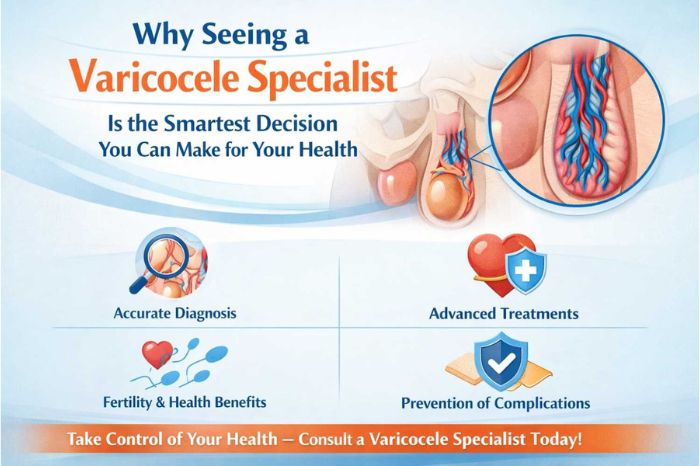
A varicocele is essentially varicose veins in the scrotum. The veins responsible for draining blood away from the testicle become swollen and dysfunctional, and that backed-up blood raises the local temperature. Sounds minor. It isn’t.
The testicles operate in a narrow temperature window for good reason; sperm production is highly sensitive to heat. When that environment is disrupted consistently over months or years, the effects compound. Sperm quality drops. Testosterone production can suffer. In some cases, the testicle itself begins to shrink.
Most varicoceles appear on the left side, which comes down to basic anato, my the left testicular vein drains at a sharper angle, making it more prone to pressure buildup. But both sides can be affected, and bilateral varicoceles are often missed entirely because symptoms can be so mild.
And that’s the genuinely tricky part. Some men feel significant pain. Others feel nothing at all right up until a semen analysis or a fertility workup uncovers what’s been quietly happening. By that point, the damage isn’t always fresh.
Why your GP can only take you so far
Getting a varicocele diagnosed by a general physician is straightforward enough. An ultrasound, a physical examination, and the word “varicocele” get added to your file. What often doesn’t follow is a clear plan because managing it properly sits outside the lane of general practice.
A varicocele specialist operates with a completely different depth of knowledge. An interventional radiologist or a urologist with specific vascular training doesn’t just confirm that the problem exists. They assess the grade, examine blood flow patterns, factor in your fertility status, and work out which treatment approach makes the most sense for your particular anatomy and goals.
That distinction matters more than most people realise when they’re sitting in a GP’s office getting told: It’ss varicocele, keep an eye on it.”
Treatment has changed a lot.
If your mental image of varicocele treatment involves surgery, recovery time, and weeks off your feet, it’s time to update that picture.
Varicocele embolisation has become the go-to option for a lot of patients, and for good reason. It’s done under local anaesthesia. No general sedation, no surgical incision in the traditional sense, just a small entry point at the groin or neck, a catheter guided under live imaging to the affected vein, and a blocking agent that shuts down the abnormal blood flow. The whole thing typically takes under an hour. Most men go home the same day and are back to normal life within a few days.
Microsurgical varicocelectomy is still a strong option for cases where surgery is the better fit. Done under magnification by an experienced surgeon, it has solid long-term results, but recovery is slower, and it’s a more involved procedure.
There’s also laparoscopic varicocelectomy, though it’s used less frequently now that embolisation has become so refined.
Which path is right for you depends on the specifics of how severe the varicocele is, what your fertility situation looks like, how your body is built, and what your timeline is. That’s a conversation for the specialist. It’s not a decision that should be made based on a quick Google search.
The fertility angle nobody talks about enough.
Here’s where things get personal for a lot of men and where ignoring varicocele carries the steepest cost.
Varicocele is one of the most common correctable causes of male infertility. The mechanism isn’t complicated: chronic heat and oxidative stress from poor venous drainage chip away at sperm DNA over time. It shows up in semen analysis as poor count, weak motility, abnormal morphology, sometimes all three at once.
What gets less attention is the role of overall stress and lifestyle in reproductive health. Chronic stress can indirectly affect hormone balance and overall wellbeing. Incorporating simple relaxation habits, like these 10-minute meditation techniques for beginners, can support better health alongside medical treatment.
Some couples trying to conceive discover that an untreated varicocele was the missing piece. After embolisation or surgery, natural conception becomes possible where it wasn’t before. Others see measurably better outcomes with IUI or IVF. The point is it’s a real variable, and it’s a fixable one.
Stop waiting for it to get worse.
Most men who finally see a varicocele specialist wish they’d done it sooner. Not because the process is difficult, it usually isn’t, but because the problem had more time to do damage than it needed to.
If you’ve been told you have a varicocele and left it at that, go back and get a second opinion. In cases of unexplained fertility issues, a proper vascular assessment can provide clarity. Persistent aching in the testicle, especially after physical activity or long periods of standing, shouldn’t be dismissed as “probably nothing.
Earlier treatment means a simpler procedure, faster recovery, and a better chance of reversing whatever impact the varicocele has already had. Waiting doesn’t make any of those things easier.
What often gets overlooked is how gradually symptoms build. Many men adapt to discomfort without realizing it’s becoming their new normal. That dull heaviness, the slight swelling, or the occasional pain after a long day — these aren’t things you have to live with. Modern, minimally invasive treatments are designed to address the root cause without major disruption to your routine. Taking action early doesn’t just protect fertility, it restores comfort, confidence, and peace of mind.
Finding a specialist worth trusting
Not every facility is set up to offer the full range of treatment options. Varicocele embolisation, in particular, needs the right imaging equipment and a doctor who performs it regularly, not occasionally. A dedicated interventional radiology centre is a very different environment from a general clinic that handles varicocele cases now and then.
At IRFacilities, Dr Sandeep Sharma works specifically in this space, offering advanced varicocele treatment within a setup built for exactly this kind of precision care. If you want real answers and a treatment plan that actually fits your situation, a consultation here is the right place to start.
The discomfort you’ve been tolerating has a cause. That cause has a name. And that name has a specialist attached to it who can actually do something about it. The only thing left is making the call.


Leave a Reply