

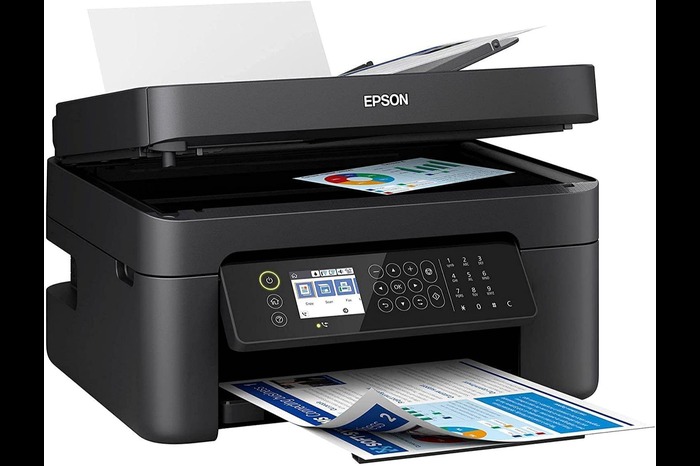
For over a decade, we have been promised the “paperless office.” Yet, as we move through 2026, the reality is more nuanced. While digital transformation has reduced our reliance on physical documents, it has simultaneously increased the value of the documents we do choose to print. In this “paper-light” era, printers & scanners have evolved from clunky, peripheral hardware into sophisticated, AI-integrated edge devices that act as the bridge between the physical and digital worlds.
Whether you are a creative professional needing color-accurate proofs, a law firm managing thousands of physical archives, or a remote worker optimizing a home office, the technology behind printing and scanning has undergone a quiet revolution.
The Printing Revolution: Efficiency and Sustainability
The conversation around printers in 2026 is dominated by two major shifts: the total dominance of tank-based systems and the rise of sustainable “green” printing.
1. The Death of the Cartridge
The era of expensive, small-yield plastic cartridges is largely over. Most modern office and home printers now utilize high-capacity, refillable ink tank systems (often called Eco-Tanks or Mega-Tanks). These systems provide thousands of pages of output from a single refill, drastically reducing the cost-per-page and minimizing plastic waste. For businesses, this means the “Total Cost of Ownership” (TCO) has plummeted, making high-speed color printing more accessible than ever.
2. Precision and Speed: Laser vs. Inkjet in 2026
While laser printers remain the gold standard for high-volume text documents due to their incredible speed and crispness, inkjet technology has closed the gap. Professional-grade inkjets now feature “page-wide” print heads that don’t move back and forth; instead, the paper moves under a stationary array of thousands of nozzles, allowing for speeds that rival heavy-duty laser copiers while consuming significantly less energy.
The Scanning Renaissance: From Images to Intelligent Data
If the printer is the device that “exports” digital thoughts into the physical world, the scanner is the “import” gate. In 2026, scanning is no longer just about taking a picture of a piece of paper; it is about Data Extraction.
AI-Enhanced OCR (Optical Character Recognition)
Modern scanners are now equipped with onboard AI processing. When you scan a document, the device doesn’t just create a PDF; it understands the content. It can automatically identify a document as an invoice, extract the vendor name, date, and total amount, and then route that data directly into an accounting software or cloud storage. This “intelligent capture” has turned the scanner into a tool for automated workflow rather than just a digital photocopier.
The Rise of ADF and Duplex Scanning
For the modern office, the flatbed scanner is now a secondary tool, reserved for delicate photos or thick books. The primary workhorse is the Automatic Document Feeder (ADF) with “Single-Pass Duplexing.” These devices scan both sides of a page simultaneously, reaching speeds of over 100 images per minute. This is essential for digital archiving projects where speed and reliability are paramount.
Security in the Age of IoT
One of the most overlooked aspects of printers & scanners is security. In 2026, these devices are essentially specialized computers connected to your network. This makes them potential targets for cyberattacks.
Modern hardware now includes:
-
Self-Healing Firmware: The device can detect a BIOS or firmware breach and automatically revert to a secure version.
-
Encrypted Storage: Hard drives inside office printers now use AES-256 encryption to ensure that “latent images” of sensitive documents cannot be recovered if the machine is decommissioned.
-
Pull Printing: To prevent sensitive documents from sitting in the output tray where anyone can see them, users must authenticate themselves (via a badge or smartphone) at the printer before the job begins.
Building the Digital Infrastructure
To truly leverage the power of modern peripherals, your underlying technology stack must be robust. A high-speed scanner is only as good as the network it’s sending data to, and a professional-grade printer requires high-performance computing to handle large, complex graphical files.
For many organizations, the challenge isn’t just buying the hardware; it’s ensuring that their entire IT ecosystem is synchronized. This is where specialized digital partners become invaluable. Companies like Tecisoft provide the necessary hardware, software, and integration services to ensure that these advanced printers and scanners function as part of a seamless, high-efficiency digital workflow. By aligning your peripheral strategy with your broader IT goals, you can turn simple office equipment into a competitive advantage.
3. Specialty Printing: 3D and Large Format
We cannot discuss printing in 2026 without mentioning the expansion of the category.
-
Large Format Printing: Marketing agencies and architectural firms are utilizing 12-color pigment ink systems that offer a color gamut wider than most computer monitors.
-
The Desktop 3D Revolution: While once reserved for industrial labs, high-precision resin 3D printers have become staple “printers” in dental offices, jewelry shops, and engineering firms, allowing for the rapid prototyping of physical objects with the same ease as printing a letter.
Sustainability: The Green Printer
In 2026, corporate responsibility is a driving force behind hardware purchases. Manufacturers have responded with “Circular Economy” initiatives. This includes:
-
Bio-Inks: Soy and vegetable-based inks that are easier to remove during the paper recycling process.
-
Zero-Waste Packaging: Printers now ship in biodegradable molds rather than Styrofoam.
-
Energy Star 4.0: New standards have pushed the standby power consumption of scanners and printers to near-zero levels.
Choosing the Right Hardware for Your Needs
When evaluating printers & scanners, consider the “Rule of Three”:
-
Volume: How many pages do you actually produce per month? (Overestimating leads to wasted capital; underestimating leads to high maintenance costs).
-
Connectivity: Do you need a “mobile-first” setup? Most modern units now support cloud-native scanning and printing directly to Google Drive, Dropbox, or OneDrive without a PC.
-
Output Quality: Is this for internal records (where speed and cost matter) or client-facing materials (where color accuracy and resolution are non-negotiable)?
Conclusion
The world of printers & scanners is no longer a stagnant category of beige boxes. In 2026, these machines are dynamic, intelligent, and highly secure. They represent the final frontier of the digital-physical interface. By choosing hardware that prioritizes tank-based efficiency, AI-driven data extraction, and robust network security, you aren’t just buying office equipment—you are building a bridge to a more organized, efficient, and professional future.
Whether you are scanning a 50-year-old family photo to preserve it in 8K resolution or printing a complex architectural blueprint, the technology available today ensures that your physical output is just as impressive as your digital vision.
The Edge AI Revolution in Scanning
In 2026, the biggest shift in scanning technology is the move from “Cloud-only” processing to Edge AI. Historically, high-speed OCR (Optical Character Recognition) required sending data to a powerful remote server, which could create latency and security bottlenecks. Today, top-tier scanners are equipped with dedicated AI chipsets that perform complex data extraction directly on the device.
This means that a modern scanner can identify a handwritten note, a coffee-stained receipt, or a multi-page legal contract and “understand” the contents in milliseconds before the file even hits your network. These devices are now capable of Auto-Segmentation, where the AI distinguishes between images and text, optimizing the file size and clarity of each element independently. For industries like healthcare and law, this ensures that critical data is captured with 99.9% accuracy, significantly reducing the manual “clean-up” time that used to plague digital archiving projects.
Zero Trust Printing and Quantum-Resistant Security
As the workforce has become entirely decentralized, the security protocols for printers & scanners have had to evolve. We have moved beyond simple PIN codes. In 2026, the industry has adopted a Zero Trust Architecture. Every print job is encrypted end-to-end and requires “Identity-Centric Authentication.”
Instead of passwords, professionals now use biometrics or NFC-enabled smartphones to “release” a print job. Furthermore, with the looming threat of quantum computing, the latest office hardware is being built with Quantum-Resistant Cryptography. This ensures that even as computing power scales globally, your sensitive company data remains shielded from interception. Your printer is no longer a vulnerability; it is a secure endpoint that is as hardened as your primary company servers.
The Rise of Sustainable Substrates and Bio-Inks
Sustainability in 2026 has moved past the “recycled paper” stage. Leading organizations are now utilizing Alternative Fiber Substrates. We are seeing a surge in papers made from bamboo, hemp, and even seaweed, which require significantly less water and land to produce than traditional wood pulp.
The inks have changed, too. Petroleum-based toners are being replaced by Bio-Based Inks and algae-derived pigments. These are not only carbon-neutral but are also easier to “de-ink” during the recycling process. Allowing paper fibers to be reused more times than ever before. For a modern brand, the choice of ink and paper is now a key part of their ESG (Environmental, Social, and Governance) reporting, turning a standard print job into a statement of corporate responsibility.
Integrated Ecosystem Management
Perhaps the most significant change for the modern IT manager is the transition of hardware into a unified Managed Digital Services model. In 2026, a printer is never just a printer; it is a node in a global ecosystem. Through companies like Tecisoft, businesses are now able to manage their entire fleet of peripherals. From 3D printers in the lab to wide-format scanners in the design studio—through a single, AI-driven dashboard.
This level of integration allows for Predictive Maintenance 2.0. The system doesn’t just tell you when the ink is low; it analyzes usage patterns to predict when a mechanical part is likely to fail, automatically dispatching a technician before a breakdown even occurs. This shift from “reactive” to “proactive” management is what defines the high-efficiency workplace of 2026. By bridging the gap between sophisticated hardware and intelligent software. Organizations can finally stop worrying about their office tools and focus entirely on their core mission.
Final Summary: The Value Over Volume Era
Ultimately, the role of printers & scanners in 2026 is defined by Value over Volume. We are printing less, but the documents we do produce are higher in quality. More secure, and more integrated into our digital workflows. By embracing these AI-driven, eco-conscious, and security-hardened tools, you are ensuring that your physical documents are a seamless extension of your digital excellence


Leave a Reply