

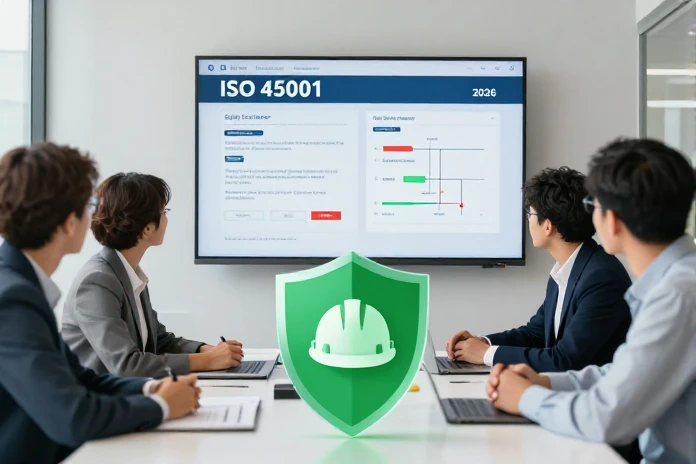
Workplaces today don’t look anything like they did a decade ago. Machines are faster, processes are tighter, and employees are juggling more responsibilities than ever. And somewhere in that mix, one thing quietly decides how stable an organization really is workplace safety.
It’s easy to ignore safety when everything seems to be running fine. But most organizations learn its importance when something small goes wrong. A near miss. A breakdown in communication. Or an avoidable injury that slows everything down.
That’s where ISO 45001 certification comes in. Not as a rulebook, but as a structured way of thinking about safety before problems show up.
Why Workplace Safety Is Getting More Attention in 2026
Let’s be honest—work environments are getting more intense.
Deadlines are tighter. Operations are faster. Teams are often stretched across multiple responsibilities. Even office setups, which once felt low-risk, now deal with stress, posture issues, and burnout patterns.
So safety is no longer just about helmets or warning signs.
With ISO 45001 certification, organizations start looking at safety in a broader way:
- Physical risks in operations
- Mental and ergonomic stress in offices
- Process-related hazards in workflows
It’s a shift from reacting to incidents to understanding what could cause them in the first place.
And that shift changes everything.
Who Actually Needs ISO 45001 Certification?
Not every organization feels the same level of risk. But some environments naturally need more structured safety control, and ISO 45001 certification becomes especially relevant there.
Manufacturing and Industrial Workplaces
This is where safety risks are most visible.
Heavy machinery, repetitive tasks, and fast production cycles leave very little room for error. A small oversight can create a chain reaction.
With ISO 45001 certification, these workplaces can:
- Standardize safety procedures
- Identify hazards before incidents happen
- Improve day-to-day operational discipline
Construction and Field Operations
Construction sites change daily. New risks appear as projects progress.
Here, ISO 45001 certification helps bring consistency to an otherwise unpredictable environment.
It supports better coordination between teams and reduces confusion during high-risk activities.
Healthcare and Emergency Services
Hospitals and healthcare facilities deal with a different kind of pressure—constant movement, critical decisions, and exposure risks.
ISO 45001 certification helps manage:
- Staff safety during high-pressure situations
- Exposure control and hygiene protocols
- Equipment handling practices
Office-Based Organizations
This one surprises people.
Offices don’t look dangerous, but risks still exist—stress, repetitive strain, long working hours, and poor workstation setups.
With ISO 45001 certification, these risks become visible instead of being ignored.
Is ISO 45001 Certification Mandatory in India?
Here’s the straightforward answer: no, it is not mandatory in India.
But that doesn’t mean it’s optional in spirit.
Many organizations still choose ISO 45001 certification because it improves internal safety systems and builds trust among employees.
And there’s a subtle shift happening companies are starting to treat structured safety systems as part of responsible operations, not just compliance.
So while it’s not legally required, its importance is growing quietly.
How Long Does ISO 45001 Certification Take?
There’s no fixed timeline for ISO 45001 certification. It depends on how prepared an organization already is.
The process usually involves:
- Reviewing existing safety practices
- Identifying gaps in procedures
- Training employees
- Implementing structured systems
- Running internal checks
For some organizations, it moves quickly. For others, especially larger setups, it takes more time.
But here’s the thing this isn’t something to rush. A strong system built slowly usually lasts longer.
Top 7 Benefits of ISO 45001 Certification for Companies
When organizations implement ISO 45001 certification, the changes are often gradual but noticeable.
1. Fewer Workplace Disruptions
Better safety control reduces avoidable interruptions.
2. Stronger Risk Awareness
Teams start noticing hazards earlier than before.
3. Clear Safety Procedures
Everyone knows what to do, reducing confusion.
4. Better Employee Confidence
A safer environment naturally improves morale.
5. Improved Communication
Safety becomes part of everyday discussions.
6. More Stable Operations
Fewer incidents mean smoother workflows.
7. Long-Term Cultural Shift
Safety becomes part of how the organization thinks.
None of these changes happen overnight, but they build steadily over time.
Employee Role in ISO 45001 Certification Systems
One important truth no safety system works without people.
With ISO 45001 certification, employees are not just following instructions. They become part of the system.
They:
- Report risks they notice
- Follow safety procedures consistently
- Participate in training sessions
- Help improve workplace practices
And when this becomes normal behavior, safety improves naturally.
Continuous Improvement in Workplace Safety
A strong feature of ISO 45001 certification is that it doesn’t stay fixed.
Organizations regularly:
- Review safety performance
- Analyze incidents or near misses
- Adjust procedures based on findings
It’s a cycle that keeps improving over time.
Even small changes like adjusting a workflow or improving communication can make a real difference.
Safety as a Workplace Mindset, Not Just a System
Here’s where things get interesting.
Some organizations treat safety as documentation. Others treat it as culture.
The second approach works better.
With ISO 45001 certification, safety slowly becomes part of everyday thinking:
- People notice risks without being reminded
- Teams speak up earlier
- Managers act faster on concerns
It becomes less about rules and more about awareness.
The Future of ISO 45001 Certification in Workplaces
Work environments will keep evolving. More automation, hybrid work models, and faster operations will introduce new types of risks.
In that changing environment, ISO 45001 certification provides structure.
It helps organizations:
- Stay consistent in safety practices
- Adapt to new working conditions
- Maintain control over operational risks
And as expectations rise, structured safety systems will likely become even more important.
Final Thoughts on ISO 45001 Certification
Workplace safety is no longer something that can be treated casually.
ISO 45001 certification offers a structured way to manage it step by step, without overcomplicating things.
It may not be mandatory in India, and it may take time to implement, but its impact shows up in quieter ways: fewer disruptions, more awareness, and a safer working environment overall.
And sometimes, those quieter improvements are the ones that matter most.


Leave a Reply