

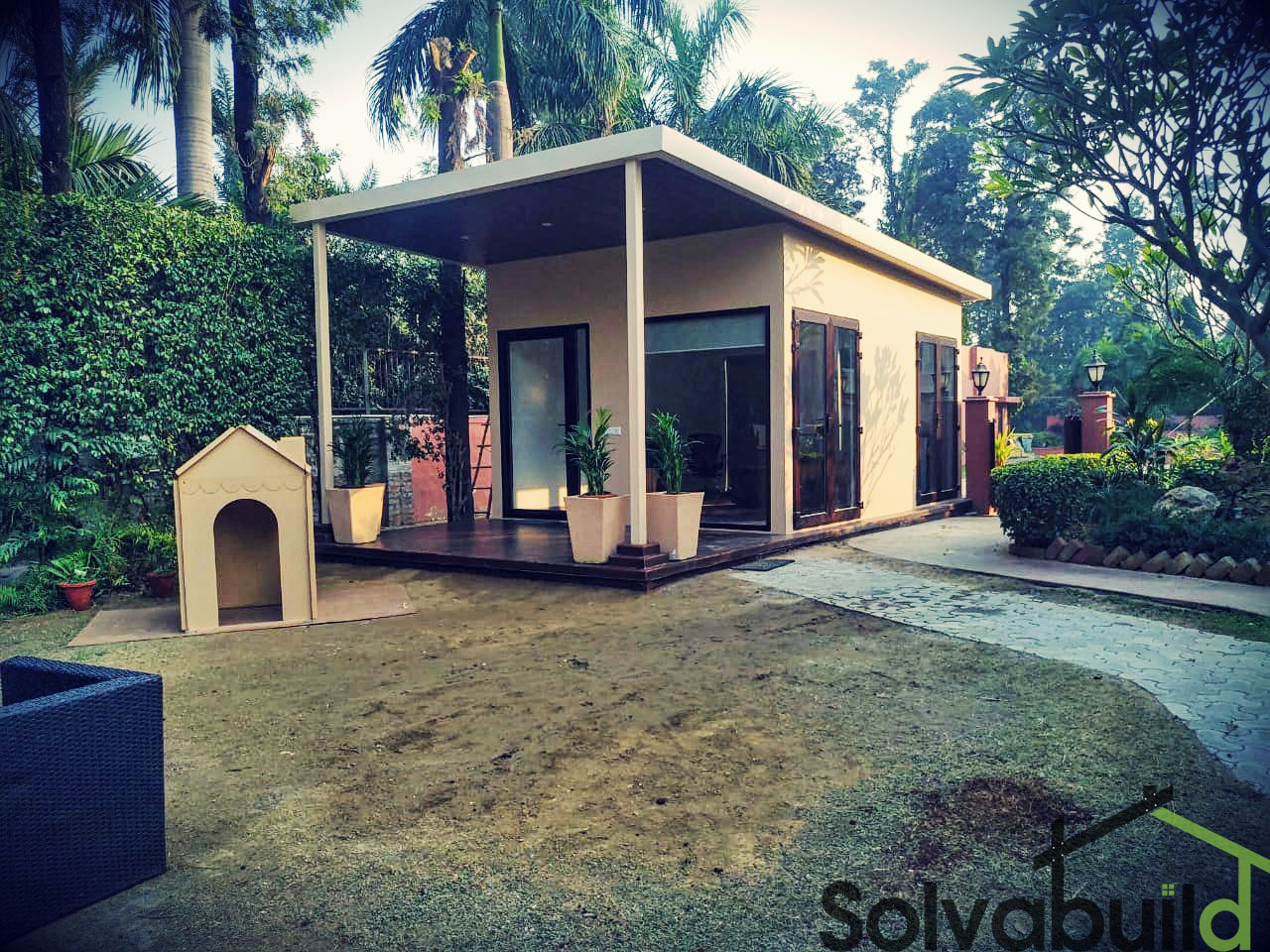
How do rapidly growing cities create more usable space when land is limited, construction timelines are tight, and costs continue to rise? This is a challenge urban planners, businesses, and developers are constantly trying to solve. As populations grow and infrastructure struggles to keep pace, traditional construction methods often fall short in terms of speed, flexibility, and efficiency.
Prefabricated structures are quietly reshaping the urban landscapes. These modern solutions are being used across industries to address space constraints in practical and scalable ways. Backed by evolving design capabilities and reliable portable cabin suppliers, they are helping cities adapt faster without compromising functionality.
Here’s how.
1. Maximizing Limited Urban Land
In densely populated cities, every square foot matters. Prefabricated structures are designed to make the most of compact plots by enabling vertical expansion and efficient layouts. Unlike conventional construction, which often requires significant groundwork and extended timelines, these structures can be installed quickly and configured to fit tight or irregular spaces.
From small office facilities to retail units and on-site workspaces, portable cabins allow businesses to operate effectively even in areas where traditional construction isn’t feasible.
2. Enabling Faster Infrastructure Development
Urban space constraints are often tied to time as much as land. Delayed construction projects can disrupt planning and increase costs. Prefabricated structures significantly reduce construction timelines since major components are manufactured off-site and assembled on location.
This speed allows developers and city planners to respond quickly to growing demands, whether it’s setting up temporary administrative offices, healthcare facilities, or educational spaces. Experienced portable cabin suppliers play a critical role here, ensuring timely delivery and installation without delays that typically come with conventional building methods.
3. Supporting Temporary Yet Scalable Facilities
Cities frequently need temporary spaces that can evolve over time, such as construction site offices, event facilities, or transit hubs, for example. Prefabricated structures offer the flexibility to create facilities that can be expanded, relocated, or repurposed as needs change.
This adaptability helps reduce long-term spatial pressure. Instead of committing to permanent construction in already crowded areas, businesses and authorities can deploy portable cabins that serve immediate needs and can be moved or reconfigured later.
4. Optimizing Underutilized Spaces
Urban environments often have underused or overlooked areas, vacant lots, rooftops, or spaces between existing buildings. Prefabricated structures can transform these into functional environments without extensive structural changes.
For example, portable cabins can be installed as co-working spaces, pop-up retail outlets, or site offices in areas that would otherwise remain unused. This approach not only addresses space shortages but also improves the overall efficiency of urban land use.
5. Reducing Construction Disruptions
Traditional construction projects can take months or even years, often causing noise, dust, and logistical challenges in already crowded city environments. Prefabricated structures minimize on-site construction activity since most of the work is completed in controlled manufacturing facilities.
This makes them ideal for urban settings where minimizing disruption is essential. Businesses can set up operational facilities faster, and residential or commercial areas experience less inconvenience during the installation process.
6. Offering Cost-Effective Space Solutions
High land and construction costs are major concerns in cities. Prefabricated structures provide a more predictable and often more affordable alternative. Since manufacturing processes are standardized and less dependent on on-site variables, costs can be controlled more effectively.
Additionally, working with reliable portable cabin suppliers ensures that businesses receive structures that meet quality standards while staying within budget. This cost efficiency makes it easier for startups, SMEs, and even large enterprises to expand their presence in space-constrained urban markets.
7. Adapting to Evolving Urban Needs
Cities are constantly changing, and infrastructure needs to keep up. Prefabricated structures allow for quick adaptation, whether it’s creating additional office space, setting up healthcare facilities during emergencies, or expanding educational infrastructure.
Their ability to be modified, relocated, or scaled makes them a future-ready solution. Instead of being tied to rigid construction, organizations can respond dynamically to shifting demands, making better use of limited urban space.
Conclusion
Space constraints in cities aren’t going away, but the way we solve them is evolving. Prefabricated structures offer a smarter, faster, and more adaptable approach to creating functional spaces where traditional construction struggles to keep up.
If you’re looking to make better use of limited urban space without compromising on quality or timelines, working with the right partner makes all the difference. Solvabuild brings together design expertise, reliable execution, and high-quality prefabricated solutions tailored to modern urban needs.
Whether you need a compact office, a scalable facility, or a customized structure for your business, Solvabuild helps you build efficiently, without the delays of conventional construction.
Get in touch with Solvabuild today and take the first step toward smarter space solutions.


Leave a Reply